
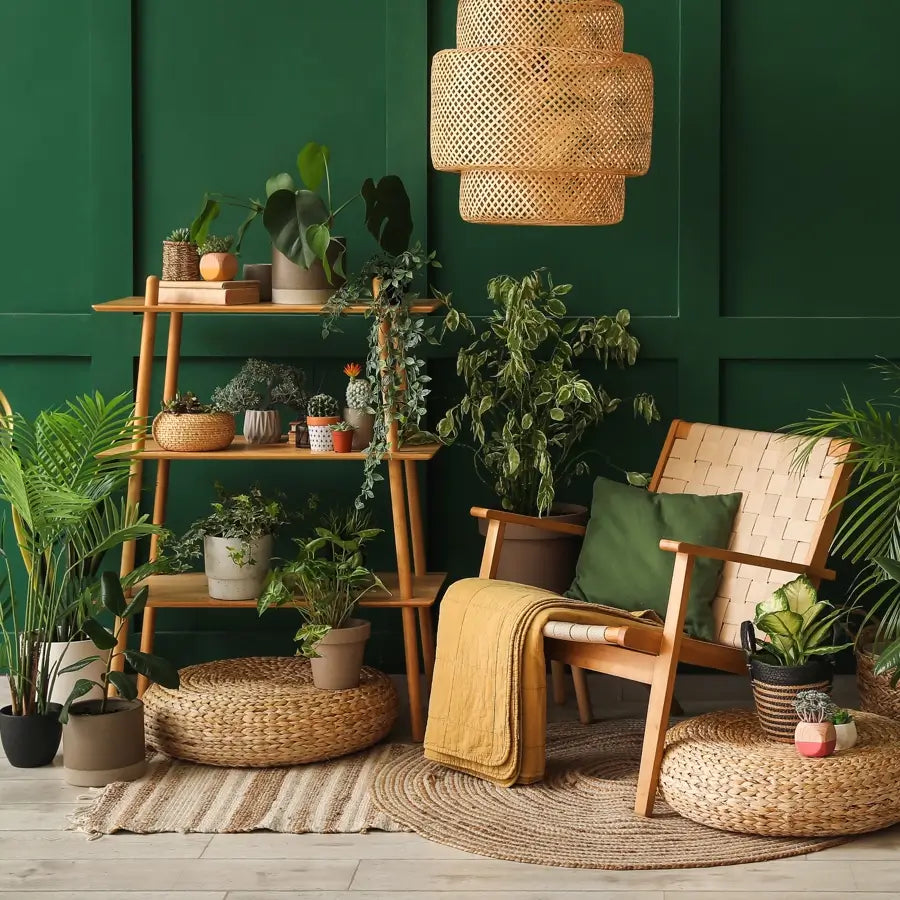
The Best Houseplants: Must-Have Classics for Your Home
Must-have classics for real homes: 8 houseplants, from snake plant and peace lily to Monstera and ZZ plant, plus quick care tips, pairing ideas, and pest-prevention basics.
Read more
The story of Alocasia longiloba begins in the dense, humid forests of Southeast Asia, where European explorers in the mid-19th century first encountered this striking plant. Botanists like John Lindley and Heinrich Wilhelm Schott, renowned for their work in the Araceae family, were among the first to document Alocasia longiloba. They were captivated by its large, arrow-shaped leaves, with their glossy dark green upper surfaces and rich purple undersides, and their work laid the groundwork for the plant’s introduction to European gardens and conservatories.

Alocasia longiloba is a botanical marvel, boasting a complex and beautiful morphology. The plant typically grows between 40 cm and 150 cm tall, supported by a robust rhizomatous base that often extends along the ground. This rhizome, which can reach up to 60 cm in length, serves as the anchor for the plant’s large, pendulous leaves. These leaves, varying in size from 27 cm to 85 cm in length and 14 cm to 40 cm in width, are typically sagittate (arrow-shaped) or hastate (spear-shaped). Their upper surfaces are a dark, glossy green, while the undersides range from lighter green to deep purple or maroon.
One of the most striking features of Alocasia longiloba is the prominent venation on its leaves. The primary lateral veins are often highlighted in a contrasting color—usually white or pale grey-green—creating a striking pattern that draws the eye. The petioles, which can grow up to 120 cm in length, are frequently mottled with shades of green, brown, or even purple, adding to the plant’s visual complexity. The posterior lobes, situated near the petiole, are smaller and curved, contributing to the overall elegance of the plant’s form.
In addition to its foliage, Alocasia longiloba also produces inflorescences, though these are less common in cultivated specimens. The inflorescence consists of a spathe and spadix. The spathe, a leaf-like bract, encloses the spadix, which bears the plant’s tiny male and female flowers. The spathe is typically pale green, while the spadix can vary in color from white to pale orange, depending on the plant’s stage of development.

The introduction of Alocasia longiloba into European greenhouses and gardens marked the beginning of its journey as a parent plant for numerous cultivars and hybrids. The plant’s adaptability and striking morphology made it an ideal candidate for hybridization, leading to the creation of many well-known hybrids that have become staples in ornamental horticulture.
One of the most famous hybrids is Alocasia ‘Amazonica’, often referred to as the “African Mask” plant. This hybrid, a cross between Alocasia sanderiana and Alocasia longiloba ‘Watsoniana’, is celebrated for its dramatic foliage, characterized by dark green leaves with bold white veins and a distinct, shield-like shape. Alocasia ‘Polly’, a more compact version of Amazonica, has also gained popularity due to its smaller size and similar visual appeal.
Other notable hybrids include Alocasia ‘Sedenii’, a cross between Alocasia longiloba ‘Lowii’ and Alocasia cuprea. This hybrid features glossy, metallic leaves with intricate patterns, a testament to the blending of traits from its parent plants. Alocasia ‘Orchid Jungle’ and Alocasia ‘Mark Campbell’ are additional examples of how Alocasia longiloba has contributed to the development of plants that continue to captivate and delight plant enthusiasts worldwide.
In addition to these hybrids, Alocasia longiloba has given rise to several notable cultivars. These include Alocasia longiloba ‘Denudata’, known for its upright growth habit and deep green leaves, and Alocasia longiloba ‘Watsoniana’, which is celebrated for its elongated, velvety leaves with prominent white veins. Alocasia longiloba ‘Lowii’, with its narrower leaves and more compact growth habit, remains a popular choice for those who wish to enjoy the beauty of Alocasia longiloba in a smaller form.
These cultivars and hybrids not only demonstrate the plant’s versatility but also its importance in the ongoing development of ornamental plants. Each new generation of cultivars continues to capture the imagination of plant enthusiasts, ensuring that the legacy of Alocasia longiloba lives on.
The influence of Alocasia longiloba extends far beyond its immediate descendants. The plant has played a significant role in the broader development of the Alocasia genus in cultivation, serving as a genetic bridge that has enabled the creation of plants with a wide range of forms, colors, and growth habits. Its adaptability has allowed it to thrive in a variety of growing conditions, making it a valuable resource for horticulturists looking to create new and exciting plants.
The popularity of Alocasia longiloba and its hybrids can be attributed not only to their striking appearance but also to their ability to bring a touch of the exotic into everyday life. These plants, with their lush, tropical foliage, offer a connection to the natural world that is both tangible and aesthetic. They are living pieces of history, carrying within them the legacy of the explorers and botanists who first brought them to light.

Today, Alocasia longiloba and its hybrids are cherished as houseplants, valued for their dramatic foliage and the sense of the exotic they bring to indoor spaces. Caring for these plants requires a bit of knowledge and attention, but the rewards are well worth the effort.
The story of Alocasia longiloba is one of discovery, adaptation, and ongoing evolution. From its origins in the tropical forests of Southeast Asia to its role as a parent plant in the creation of beloved hybrids and cultivars, Alocasia longiloba has left an indelible mark on the world of horticulture. Whether in the wild or in the home, this plant continues to captivate with its striking beauty and the rich history it represents. As a houseplant, it offers not just a visual feast but also a connection to the natural world and the legacy of botanical exploration.
The Best Houseplants: Must-Have Classics for Your Home
Must-have classics for real homes: 8 houseplants, from snake plant and peace lily to Monstera and ZZ plant, plus quick care tips, pairing ideas, and pest-prevention basics.
Read more
Comparing Philodendron 'Orange Marmalade', 'Calkin's Gold', and 'Painted Lady'
Not sure whether you’ve got Philodendron ‘Orange Marmalade’, ‘Calkins Gold’, or ‘Painted Lady’? This guide compares foliage colour, leaf shape, petiole traits, growth habit, and care so you can ID ...
Read more