
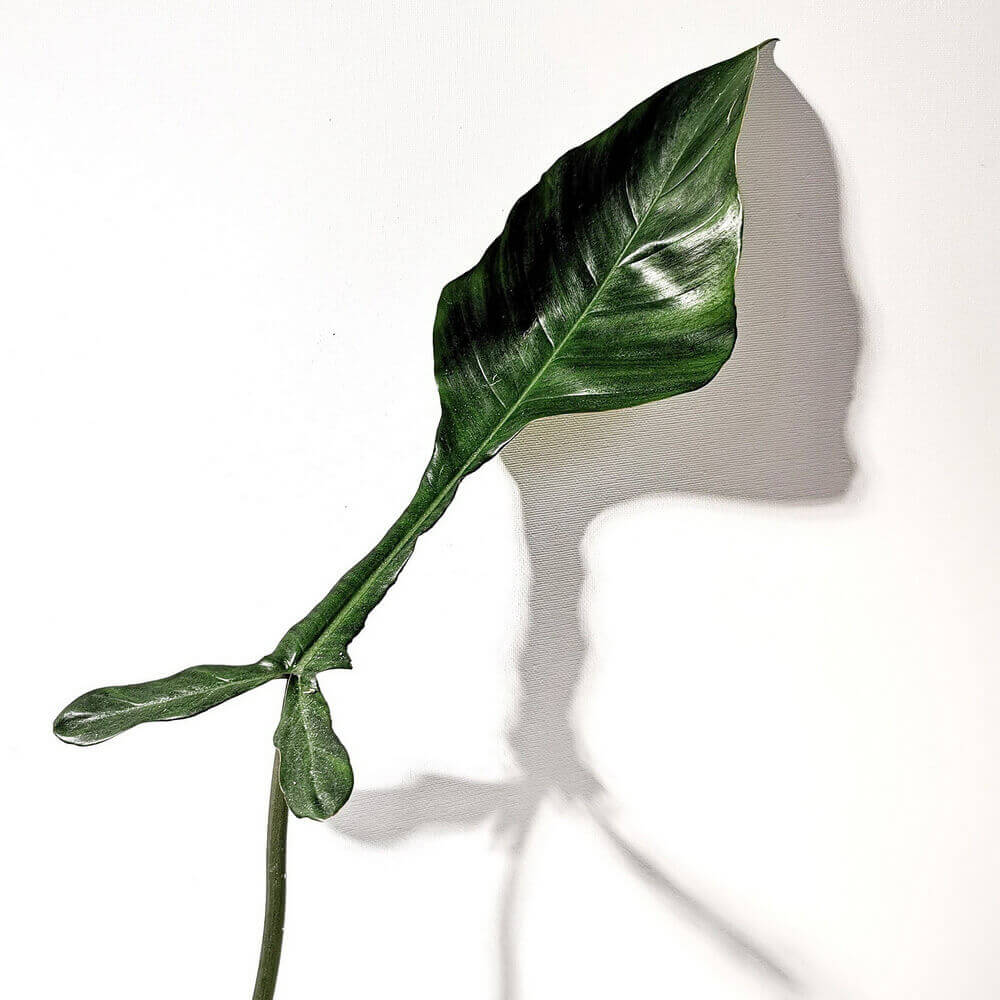
Philodendron joepii may be a natural hybrid linked to Philodendron pedatum, while Philodendron 'Glad Hands' shows the species’ striking variation. Get a clear comparison of leaf shape, growth habit...
Read more

Ferns aren’t just another passing houseplant trend. They’re living fossils — older than flowering plants, older than birds, even older than dinosaurs. For over 400 million years, ferns have spread across forests, cliffs, and canopies, reproducing not with seeds, but with spores. And while houseplant fads come and go, ferns remain relevant — not just because they’re beautiful, but because they bring something uniquely untamed into our homes.
Their finely divided fronds soften the hard edges of modern interiors. Their variety spans from tiny terrarium-dwellers to sculptural giants that anchor a whole room. But their care? That’s where things go wrong.
This variation arises from highly adaptable leaf meristems: ferns develop fronds using marginal and apical growth zones with distinct cell geometries, allowing a broad range of symmetry, repetition, and structural complexity. (Cruz et al., 2020)
Too many fern care guides still rely on myths: “Just mist it,” “Put it in the bathroom,” or “Ferns are easy.” These oversimplifications fail beginners — and the plants themselves. Some species will drop every frond if you miss a single watering. Others are surprisingly tolerant. But none of them thrive on generic advice.
What ferns really need isn’t more tips — it’s better understanding. This guide is built around exactly that.
Whether your goal is to revive a failing maidenhair or pick the right fern for a dry room, this isn’t a copy-paste care sheet. It’s a full, myth-free manual based on how ferns evolved — and how to work with that, not against it.
Term |
Definition |
|---|---|
Gametophyte |
The first life stage of a fern that grows from a spore; a small, heart-shaped structure that produces both sperm and eggs in moist conditions. |
Sporophyte |
The mature fern plant we typically recognize, with roots and fronds; it grows after fertilization and produces spores for reproduction. |
Epiphyte |
A plant that grows on other plants (usually trees) without extracting nutrients from them; absorbs water and nutrients from the air and debris. |
Sori |
Small clusters of spore capsules found on the undersides of fern fronds; essential for fern reproduction and a sign of maturity. |

Caring for ferns successfully indoors starts with understanding what they are — not just in pots, but in the ecosystems they evolved in. Ferns don’t behave like most common houseplants. They don’t flower, they don’t grow from seeds, and they don’t respond to care routines designed for succulents or tropical vines. Why? Because their entire biology is built on a much older system.
Ferns belong to a clade of vascular plants called monilophytes (class Polypodiopsida), distinct from seed-bearing groups by their spore-based reproduction and independent gametophyte stage. (Atallah & Banks, 2015) This spore-based life cycle dates back over 400 million years, making ferns far older than conifers, flowering plants, or mammals. Major fern lineages include families like Polypodiaceae (e.g. Phlebodium), Aspleniaceae (e.g. Asplenium), and Davalliaceae (e.g. Davallia) — each with distinct growth habits, habitats, and ecological niches. (American Fern Society, 2024)
Their life cycle is unlike anything else on your plant shelf. A mature fern (called a sporophyte) releases thousands of dust-like spores from the underside of its fronds. If those spores land somewhere moist, shaded, and stable, they develop into a completely separate life form — a gametophyte — a tiny, heart-shaped structure that produces both sperm and eggs. These gametophytes also communicate chemically: mature individuals release a pheromone called antheridiogen that triggers nearby immature gametophytes to become male, increasing cross-fertilization potential. (Atallah & Banks, 2015)
And here’s the catch: fertilization only works if water is present, because fern sperm literally swim.
This explains why ferns are so sensitive to dryness. Even mature indoor ferns carry that ancestral need for constant moisture. Their vascular systems lose water rapidly. Their fronds transpire moisture constantly. Their roots are often shallow or creeping. And their tissues lack the waxy coatings that many modern plants use to hold water.
In short: ferns are designed for stable, humid, shaded environments. Indoors, that makes them more demanding — but also more rewarding if you understand what they need.

It’s a common myth that all ferns come from steamy jungles. In truth, ferns have adapted to a wide range of habitats — from warm rainforests to cool cloud forests, and even subtropical cliffs or temperate woodlands. This matters because not every fern wants the same setup.
Despite their diverse origins, most indoor-suitable ferns share some core environmental traits: diffused light, stable humidity, breathable substrate, and steady access to moisture.
When one of these is missing — especially humidity or airflow — most ferns will react fast and visibly. The mistake many growers make is treating ferns like just another green houseplant. But to succeed, you need to treat them as what they are: forest-evolved specialists with ancient needs.

Most ferns don’t fail because they’re “fussy” or “too delicate.” They fail because something essential is missing — the right light, the right moisture, or the right substrate. Once those needs are met, even high-maintenance species become steady, rewarding growers.
The key is to recreate the basic conditions of a shaded, humid forest — filtered light, even moisture, breathable soil, and consistent care.
Ferns evolved under tree canopies, not in darkness. That means they need bright, indirect light — not direct sun, but not gloom either.
📌 Still wondering what “bright indirect light” really means? This guide defines it — with real examples.
Ferns have fine, shallow roots that dry out quickly and don’t recover well from extremes. They prefer evenly moist, breathable soil — never bone dry, never swampy.
💡In horticultural trials, Boston ferns showed optimal growth under a daily light integral (DLI) of ~10–12 mol·m⁻²·d⁻¹ — confirming that bright, indirect exposure is critical. (Seltsam & Owen, 2022)
💡 Tip: Use filtered or rainwater if your tap water is high in minerals. Ferns are sensitive to salt accumulation over time.
📌 Want to master watering timing and technique? Our in-depth watering guide will help prevent both drought and rot.

Ferns can tolerate imperfect light or water for a while. But without adequate humidity, most will deteriorate fast — especially species like Adiantum, Davallia, or Oceaniopteris.
📌 In natural environments, large Asplenium nidus plants are known to buffer temperature and moisture extremes in rainforest canopies, acting as stabilizers of local microclimate — which explains why they struggle in fluctuating indoor air. (Scheffers et al., 2014)
Curious whether misting helps at all? We’ve weighed the pros and cons in this detailed article.
❗Most common mistake: Blaming dry tips on watering, when the real problem is dry air.
📌 Not sure how to keep humidity consistent? This guide to mastering indoor humidity breaks it down clearly — no gadgets required.
Ferns need soil that holds moisture without suffocating the roots. Dense or peaty mixes compact too easily and trap water.
Ferns are slow feeders. They evolved to absorb nutrients gradually from decomposing matter — not from heavy fertilization. This nutrient sensitivity reflects their origin in forest floors and tree canopies, where nutrients are sparse but constant — think composted detritus, not chemical surges.
Slow-release pellets or high-nitrogen fertilizers — they can stress or burn roots over time.
Most ferns thrive at the same temperatures we do.
💡Example: Oceaniopteris gibba and other tropical tree ferns dislike temperature drops. But Phlebodium or Asplenium can tolerate more variation.
Ferns hate root disturbance. Repot only when absolutely needed — not on a schedule.
💡Never bare-root a fern unless dividing. Their roots are delicate — handle them gently.
📌 For a step-by-step walkthrough, check out our complete guide to repotting houseplants — it covers timing, tools, and soil upgrades.
Most ferns don’t die because you watered wrong or forgot to mist. They fail because they were never the right match for your space in the first place. Some ferns thrive in bright, dry rooms with average care. Others need terrarium-level humidity and collapse if the air drops below 60%.
That’s why the most important fern care decision isn’t how — it’s which.
Before buying a fern, get clear on your environment and habits:
Knowing your setup makes it easier to pick a fern that will actually thrive — not one that constantly struggles.
Nephrolepis exaltata – Boston FernA fast-growing classic with dense, arching fronds. Great in hanging pots or large planters. Moisture-loving and dramatic when happy. Its evolutionary success is backed by phylogenetic studies showing that Nephrolepis has dispersed globally, adapting to both wild and cultivated environments with resilience. (Hennequin et al., 2010)
|

|

|
Phlebodium aureum – Blue Star FernAn epiphyte with wavy, silver-blue fronds. Surprisingly forgiving and low maintenance compared to most ferns.
|
Microsorum musifolium ‘Crocodyllus’ – Crocodile FernTextured fronds that look like reptile skin. Southeast Asian origin, grows from a creeping rhizome.
|

|

|
Asplenium nidus – Bird’s Nest FernMinimalist and architectural. Grows from a central rosette — not a typical feathery look. Glossy fronds, structural shape.
|
Davallia tyermannii – Rabbit’s-Foot FernCreeping rhizomes grow over the soil surface with a fuzzy texture. Slow-growing but full of personality.
|

|

|
Adiantum raddianum – Maidenhair FernDelicate, fast-reacting, and demanding. Gorgeous but not forgiving.
|
Oceaniopteris gibba – Miniature Tree FernPalm-like, slow-growing, with a small central “trunk.” Stunning and sculptural but very particular.
|

|

|
Zealandia pustulata (= Lecanopteris pustulata) – Ant FernA collector’s epiphyte with swollen rhizomes. Grows well mounted or in loose mix with airflow.
|
Ferns don’t reproduce like most houseplants. You won’t get new plants from stem cuttings, water propagation, or a frond in a jar. That’s because ferns don’t have nodes, stems, or meristems the way pothos or monstera do.
Instead, ferns reproduce through rhizomes or spores — ancient methods that require a completely different approach. Fortunately, there are a few reliable techniques you can use at home, as long as you match the method to the fern’s growth habit.
Avoid wasting time on methods that simply don’t apply to ferns:
✗ Leaf cuttings – Fern fronds don’t have meristematic tissue. A cut frond can’t produce roots or new growth.
✗ Stem cuttings – Ferns don’t have true stems or nodes.
✗ Water propagation – Most ferns lack the vascular triggers needed to root in water. Any success is usually from buried rhizomes or confusion with hydro-grown divisions.
Division (Clump-Forming Types) |
Rhizome Cuttings (Creeping/Epiphytic Types) |
Spore Propagation (Sexual Reproduction Required) |
|---|---|---|
Nephrolepis exaltata (Boston Fern) |
Davallia tyermannii (Rabbit’s-Foot Fern) |
Adiantum raddianum (Maidenhair Fern) |
Phlebodium aureum (Blue Star Fern) |
Microsorum pteropus (Java Fern) |
Oceaniopteris gibba (Miniature Tree Fern) |
Microsorum musifolium ‘Crocodyllus’ (Crocodile Fern) |
Zealandia pustulata (= Lecanopteris pustulata, Ant Fern) |
Blechnum brasiliense (Red-Stem Fern) |
Cyrtomium falcatum (Japanese Holly Fern) |
Campyloneurum phyllitidis (Long-Leaf Epiphytic Fern) |
Dryopteris erythrosora (Autumn Fern) |
Asplenium antiquum / nidus (only via side pups) |
Lemmaphyllum microphyllum (Tiny epiphytic fern) |
Platycerium bifurcatum (Staghorn Fern – limited spore success) |
Pteris cretica (Cretan Brake Fern) |
Polypodium formosanum (Creeping Epiphyte) |
Polystichum setiferum (Soft Shield Fern) |
Adiantum fragrans (clumping form) |
Lecanopteris sinuosa (Ant Fern species with swollen rhizomes) |
Ceratopteris thalictroides (Water Sprite – fast from spores) |
Woodwardia radicans (division possible in early stages) |
Vittaria spp. (Shoestring Fern – advanced growers only) |
Cheilanthes lanosa (Woolly Lip Fern – drought-tolerant resurrection type) |
Sori ≠ Disease
If your fern develops small brown or black dots under its fronds, don't panic – these are sori, spore capsules. They're a sign of maturity and reproductive health, and can be harvested for propagation.

Ferns are honest. When something’s off, they don’t suffer silently — they show it fast. The trick isn’t guessing — it’s recognizing the symptom, identifying the cause, and correcting the environment.
Below is a symptom-by-symptom breakdown to help you fix what’s wrong — quickly and permanently.
If your fern looks off, ask:
Chances are, the answer is in one of those five questions.
Ferns have been around for hundreds of millions of years — and so have the myths. Some are well-meaning. Most are wrong. And if you follow them, you’ll end up with dry tips, droopy fronds, or worse.
Let’s set the record straight.
Ferns don’t need gimmicks or myths. They need what they’ve always needed:
Once you ignore the noise and give them what actually works, ferns are surprisingly rewarding to grow — and far more interesting than their reputation suggests.
Ferns might look quiet and gentle — but beneath the fronds, they’re some of the most bizarre, ancient, and biologically complex plants on Earth. From ant alliances to resurrection abilities, here’s what makes them more than just “green filler.”
Ferns first evolved over 400 million years ago, during the Devonian period. That’s long before flowering plants, conifers, birds, or mammals — and even before most insects.
Some ferns grown today, like Adiantum or Polypodium, trace parts of their lineage back to forests once walked by trilobites.
Bottom line: Ferns have survived five mass extinctions — and they’re still thriving.
Most plants have one visible life stage. Ferns have two:
To reproduce, fern sperm must literally swim to the egg — which is why humidity and water are essential, even indoors.
Certain species like Zealandia pustulata (= Lecanopteris) have swollen, hollow rhizomes. In the wild, these serve as homes for ant colonies.
The ants defend the fern and feed it with nutrient-rich waste. Indoors, there are no ants — but the bizarre rhizomes still make these ferns collector favorites.
The ants defend the fern from herbivores and pathogens, while the fern provides shelter and absorbs nutrients from the ants’ waste.
Asplenium nidus acts like a natural debris trap in the wild. Its rosette collects falling organic matter, which breaks down and feeds the roots.
That’s why these ferns tolerate nutrient-poor soil but still appreciate occasional top-dressing — as long as the crown stays dry.
Xeric ferns like Cheilanthes and Pellaea can curl up, dry out completely, and survive for weeks or months. When exposed to moisture, they uncurl and green up again.
These “resurrection ferns” aren’t common as houseplants, but they prove how far fern adaptation can go.
Each mature frond often holds dozens of sori — rows of spore capsules that look like dots or dust.
If humidity and light are right, a single frond can release tens of thousands of spores. Indoors, this rarely leads to propagation — but it’s a fascinating sign of maturity.
❗ Don’t confuse sori with pests — they’re part of a healthy, mature plant.
In 19th-century Britain, “pteridomania” (fern mania) swept through Victorian society. Fern motifs appeared on everything: wallpaper, gravestones, ceramics, even corsets.
Plant hunters risked their lives collecting rare ferns, and Wardian cases (early terrariums) were invented to keep them alive in parlors — kickstarting the indoor plant movement we know today.
Some ferns possess genome sizes far larger than those of humans — with exceptionally high chromosome counts, like Ophioglossum reticulatum (2n ≈ 1260). Their complex reproductive cycles and lack of simple genetic inheritance make breeding and hybridization unusually difficult. (Gensel & Berry, 2001; American Fern Journal)
Recent ecological research suggests ferns don’t just survive post-disaster — they actively help other species by stabilizing soils, enhancing humidity, and mediating competition in disturbed environments. (Azevedo-Schmidt et al., 2024)
Ferns aren’t just houseplants — they’re evolutionary survivors, ecological innovators, and biological curiosities. Growing one indoors isn’t just about décor — it’s a small way of keeping a prehistoric life form alive in your home.

Ferns are more than survivors — they’re natural interior designers. Their layered fronds, organic forms, and soft texture can transform a sterile space into something calm and grounded. But styling a fern isn’t just about looks. A good setup also supports airflow, light access, and humidity stability — especially for species that don’t tolerate neglect.
Here are six fern-friendly styling strategies that are both beautiful and biologically smart.
Closed or semi-closed terrariums recreate the still, humid environment many ferns evolved in. They’re perfect for species that dry out quickly or need 60–80% humidity to stay healthy.
📌 Don’t mix ferns with fast-growing tropicals — they’ll get outcompeted.
Many ferns naturally spill over rocks or tree trunks. Hanging baskets recreate this flow and keep the fronds from touching dry surfaces.
Some ferns naturally grow on trees or rock faces. Mounting them mimics their native habitat and encourages healthy rhizome growth.
📌 Mounted ferns dry out fast. Good airflow is essential — but avoid cold drafts.
Shelves are great for display, but ferns still need proper light and humidity. A shelf fern in a dark corner is a death sentence.
Some ferns deserve center stage. Elevating them improves air circulation and makes it easier to monitor care.
📌 Use lightweight pots or wheeled stands if you need to reposition with the seasons.
Don’t let styling sabotage plant health. Avoid placing ferns where you can’t reach them to water, prune, or rotate. Choose containers that hold moisture without creating rot.
📌 Use removable liners or trays to simplify watering — especially in high-light or dry spots.
The best fern setups don’t just look good. They support health and longevity by aligning with how ferns grow in nature:
Design like a forest floor — not a Pinterest shelf.
Even with good routines, fern growers often run into the same questions. Here are practical, no-fluff answers to help you troubleshoot confidently.
Check the top 1–2 cm of substrate. If it feels barely dry, water deeply until it drains. Most ferns need watering 1–3× per week depending on room temperature, airflow, and light.
Only some. Phlebodium, Asplenium, and Microsorum can tolerate ~40–50% humidity. Species like Adiantum, Davallia, and Oceaniopteris usually need ~60–80% to avoid crisping.
A breathable blend that holds moisture without compacting:
Avoid dense, peat-heavy mixes — they compress fast and suffocate roots.
Most true ferns (like Nephrolepis, Asplenium, Microsorum, and Adiantum) are generally considered non-toxic. But lookalikes aren’t: asparagus “fern” and sago palm (Cycas revoluta) are toxic. Always verify the botanical name.
They slow down whenever conditions drop — especially light and warmth. If your space is cooler or darker, expect slower growth and reduced water use. Water less in low light, and skip fertilizer unless you see fresh fronds actively unfurling.
Yes — gently. Rinse under a soft stream of lukewarm water and let excess drip off. Avoid rubbing fragile fronds. For terrarium setups, use a soft brush or a gentle air blower.
Usually light is too low. Move it closer to a bright, filtered window (often within ~1–2 m). Weak, stretched fronds are classic “not enough light” growth — not a watering mystery.
Early spring, just before new fronds push. Avoid repotting in cooler conditions or right after stress (shipping, relocation, pest treatment). Divide only if it’s truly overgrown — and only species that form clumps or spread via rhizomes.
Yes. Older fronds age out, especially after a move, repot, or a noticeable environment change. Remove fully yellowed/brown fronds only. If new growth looks healthy, it’s normal cycling.
No. True ferns don’t root from fronds or “stem” cuttings. Use division, rhizome cuttings, or spores (depending on the species). Water propagation doesn’t work for true ferns.

Ferns are ancient, complex, and unlike any other houseplant you’ll ever own. They aren’t fast-growing, forgiving fillers. They’re biological specialists — with prehistoric habits, sensitive needs, and the ability to reward you with unmatched texture and rhythm when you get the setup right.
Growing ferns successfully isn’t about hacks or gimmicks. It’s about aligning your care with the way they evolved.
If your fern is failing, it’s not trying to annoy you. It’s trying to tell you something. Look for signs like brown tips, pale growth, or slow recovery. Then adjust light, humidity, soil, or watering — not all at once, but based on symptoms.
Once you find the rhythm, ferns stop being dramatic. They start to unfurl new fronds, stretch their rhizomes, and settle into the space — giving back exactly what you put in: consistency, patience, and attention.
Ferns don’t reward neglect — but they do reward attentiveness. With stable conditions, they thrive quietly, reminding us that growth is about rhythm, not rush. Notice texture, track moisture, and care consistently — not reactively. They don’t fit the “easy plant” category, but they don’t need to.
Because once you get it right, a fern becomes more than décor. It becomes a quiet reminder that life doesn't always need to be fast or flashy — it just needs the right conditions to grow.
➜ If you're ready to find the right fern for your space, explore our curated fern collection in the shop — from resilient classics to rare epiphytes, all chosen for real indoor success.
Atallah, N. M., & Banks, J. A. (2015). Reproduction and the pheromonal regulation of sex type in fern gametophytes. Frontiers in Plant Science, 6, 100.
https://doi.org/10.3389/fpls.2015.00100
→ Offers a detailed review of spore-based reproduction and gametophyte development in ferns, including pheromonal mechanisms essential to their lifecycle.
Azevedo-Schmidt, L., Currano, E. D., Dunn, R. E., Gjieli, E., Pittermann, J., Sessa, E., & Gill, J. L. (2024). Ferns as facilitators of community recovery following biotic upheaval. BioScience, 74(5), 322–332.
https://doi.org/10.1093/biosci/biae022
→ Reframes ferns as ecosystem facilitators after environmental disruption, showing their adaptive ecological roles beyond “disaster taxa.”
Chen, X.-Z., Hogan, J. A., Wang, C.-P., Wang, P.-L., & Lin, T.-C. (2023). Responses of a common tropical epiphyte, Asplenium nidus, to changes in water and nutrient availability. AoB PLANTS, 15(6), plad076.
https://doi.org/10.1093/aobpla/plad076
→ Explores how Asplenium nidus physiologically adapts to fluctuations in hydration and nutrients, informing optimal indoor care.
Cruz, R., Prado, J., & Melo-de-Pinna, G. F. A. (2020). Leaf development in some ferns with variable dissection patterns (Dryopteridaceae and Lomariopsidaceae). Flora, 270, 151658.
https://doi.org/10.1016/j.flora.2020.151658
→ Analyzes the cellular development of fern leaves and apical growth, helping explain morphological variation and its implications for growth habits.
Faust, J. L. (1986, November 30). Growing ferns indoors follows old traditions. The New York Times.
https://www.nytimes.com/1986/11/30/arts/growing-ferns-indoors-follows-olds-traditions.html
→ Historical overview of fern cultivation in domestic interiors, useful for context on ferns’ cultural significance.
Gensel, P. G., & Berry, C. M. (2001). Early lycophyte evolution. American Fern Journal, 91(3), 74–98.
https://doi.org/10.1640/0002-8444(2001)091[0074:ELE]2.0.CO;2
→ Establishes the early evolutionary divergence of lycophytes and ferns, placing them in deep-time plant lineage context.
Hennequin, S., Hovenkamp, P., Christenhusz, M. J. M., & Schneider, H. (2010). Phylogenetics and biogeography of Nephrolepis – A tale of old settlers and young tramps. Botanical Journal of the Linnean Society, 164(2), 113–127.
https://doi.org/10.1111/j.1095-8339.2010.01076.x
→ Details the evolutionary dispersal and phylogeny of the Nephrolepis genus, aiding accurate species classification.
Kumar, A., Fernández, H., & Revilla, M. A. (2011). Working with ferns: Issues and applications. Springer.
https://link.springer.com/book/10.1007/978-1-4419-7162-3
→ Covers technical propagation, physiology, and in vitro applications of ferns for horticulture and conservation.
Missouri Environment & Garden. (2022). Ferns make durable houseplants. D. Trinklein. University of Missouri.
https://ipm.missouri.edu/meg/2022/1/ferns-DT/
→ Practical extension guide explaining moisture, humidity, and substrate management for common indoor fern species.
Rostaing, J. (2019, October 24). Caring for ferns as houseplants. Brooklyn Botanic Garden.
https://www.bbg.org/article/caring_for_ferns_as_houseplants
→ Accessible care guide highlighting basic needs and troubleshooting for ferns indoors.
Scheffers, B. R., Phillips, B. L., & Shoo, L. P. (2014). Asplenium bird’s nest ferns in rainforest canopies are climate-contingent refuges for frogs. Global Ecology and Conservation, 2, 37–46.
https://doi.org/10.1016/j.gecco.2014.06.004
→ Shows that Asplenium nidus creates buffered microclimates, emphasizing its reliance on stable humidity.
Sezate, M., Sahagun, T., Henny, J., & Harder, D. (2018). Fern propagation and ex situ conservation at NTBG. American Research Plants Review, 32.
→ Describes sterile spore propagation techniques used in conservation, valuable for advanced fern cultivation.
Spencer, V., Nemec Venza, Z., & Harrison, C. J. (2021). What can lycophytes teach us about plant evolution and development? Evolution & Development, 23(3), 174–182.
https://doi.org/10.1111/ede.12350
→ Offers comparative insights into evolutionary mechanisms shared between lycophytes and ferns, supporting developmental analogies.
Srivastava, R., & Uniyal, P. L. (2013). Asplenium nidus – The Bird’s Nest Fern: Developmental studies and its conservation. American Journal of Plant Sciences, 4(5A), 45–48.
https://doi.org/10.4236/ajps.2013.45A007
→ Summarizes growth and conservation biology of Asplenium nidus, reinforcing habitat-sensitive care strategies.
University of Connecticut Extension. (2017). Ferns: Indoor growing. UConn Home & Garden.
https://homegarden.cahnr.uconn.edu/factsheets/ferns-indoor-growing/
→ Covers indoor fern care including soil mixes, humidity, watering, and temperature in temperate climates.
University of Connecticut Extension. (2017). Popular houseplant fern varieties. UConn Home & Garden.
https://homegarden.cahnr.uconn.edu/factsheets/houseplant-ferns/
→ Outlines care differences across species like Nephrolepis, Davallia, and Platycerium, explaining root habits and watering needs.
Victoria Spencer, Zoe Nemec Venza, & Cecily Jill Harrison. (2021). What can lycophytes teach us about plant evolution and development? Evolution & Development, 23(3), 174–182.
https://doi.org/10.1111/ede.12350
→ Further reinforces shared developmental patterns and evolutionary principles among ferns and ancient plant groups.
Chater, C. C. C. (2021). Commentary: Angiosperm forest. New Phytologist, 230(3), 886–888.
https://doi.org/10.1111/nph.17273
→ Provides evolutionary context for angiosperm emergence, with indirect relevance for ferns' ancestral positioning.
G N, Nagajyothi, Taj, A., G. B, Kavana, & Meghana, K. (2024). Review on fern: A fascinating foliage. Asian Journal of Environment & Ecology, 23, 97–118.
https://doi.org/10.9734/ajee/2024/v23i8587
→ Offers a wide-ranging overview of fern biology, taxonomy, and their ecological significance, with emphasis on structural adaptations.
American Fern Society. (n.d.). About ferns.
https://www.amerfernsoc.org/about-ferns
→ Briefly explains fern classification, evolution, and diversity, supporting core claims in the article about ferns as living fossils.
Nephrolepis exaltata. (n.d.). In ScienceDirect Topics: Agricultural and Biological Sciences.
https://www.sciencedirect.com/topics/agricultural-and-biological-sciences/nephrolepis-exaltata
→ Provides an academic summary of the growth, taxonomy, and care context for Nephrolepis exaltata as a tropical ornamental fern.
Philodendron joepii may be a natural hybrid linked to Philodendron pedatum, while Philodendron 'Glad Hands' shows the species’ striking variation. Get a clear comparison of leaf shape, growth habit...
Read more
Pilea peperomioides and Its Variegated Cultivars 'Mojito', 'Sugar', and 'White Splash'
Three collector favourites, three very different looks: compare variegation patterns in Pilea peperomioides ‘Mojito’, ‘Sugar’, and ‘White Splash’, then dial in care so each one grows well indoors.
Read more