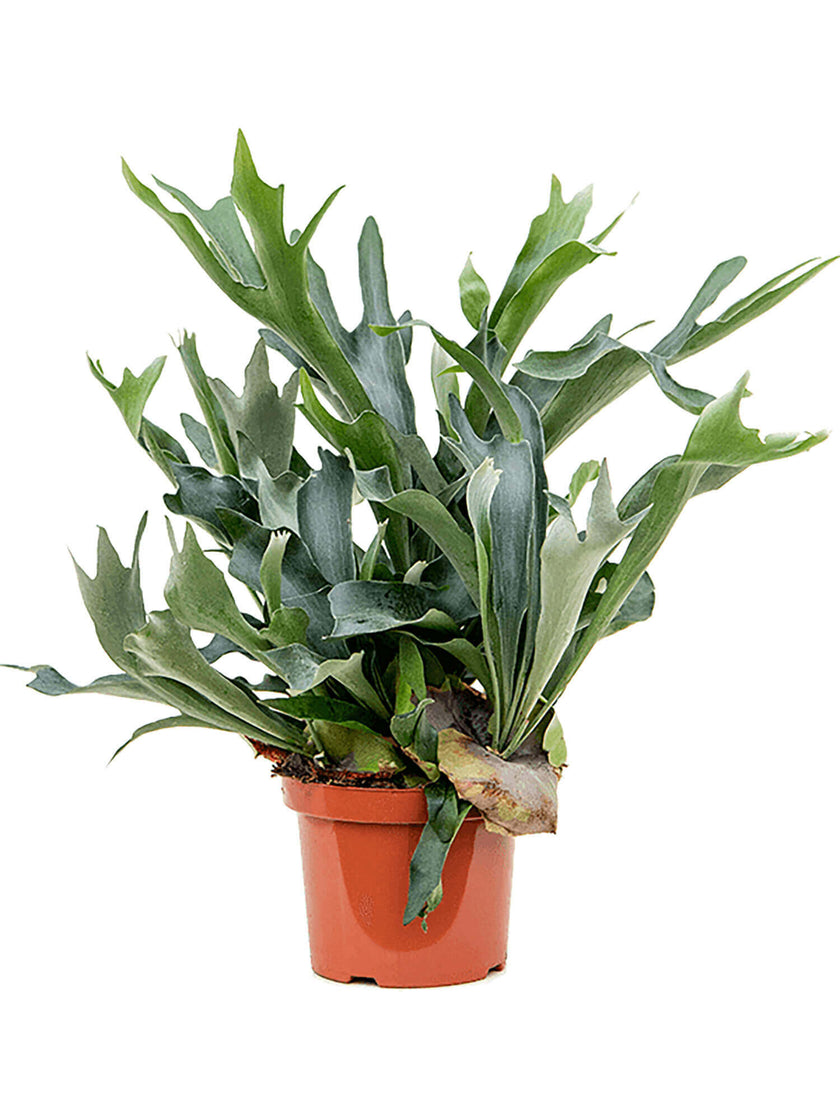
Ferns
Ferns can change the feel of a plant display more than almost any other group. Instead of thick leaves or bold outlines, they bring softness, repetition and finer texture. Many tender indoor ferns prefer rooms out of direct sun, compost that stays moist but not waterlogged, and protection from dry draughts.
That makes them excellent companions to broader tropical foliage. If a display feels too heavy or too static, ferns lighten it immediately, and the range is wider than many people think, from stricter bird’s-nest forms to more feathery basket plants.

About Our Filters
Filters help you narrow things down fast and without guessing. We put a lot of time and effort into keeping filter values consistent across the shop by cross-checking references and validating them against real-world indoor growing and handling.
Use them as guidance, not guarantees. Homes vary a lot, so for the full context (and any exceptions), open the product page and read the description.
How filtering works
- Filters stack: each selection narrows results.
- Multiple picks in one filter are usually either/or within that filter.
- Undo anytime: click a selected option again (or clear filters).
Safety
- Non-toxic: not known for relevant chemical toxicity for common pets (chewing can still cause irritation).
- Non-toxic & Pet Friendly: stricter shortlist that also avoids many physical hazards like spines, sharp tips, thorns, and bristles.
Common care filters
- Light level: Low indirect → Full sun/direct.
- Water Needs: Low / Medium / High.
- Humidity Level: Normal (40–50%) / Moist (50–60%) / Humid (60–80%+).
Growth & size
- Growth Habit: climbing, trailing, crawling, upright, self-heading, clumping, rosette.
- Needs support? none / optional / needed.
- Delivered size: pot size + plant height at shipping.
- Max size indoors: realistic long-term height + spread indoors.
Looks & botanical browsing
- Leaf Shape & Size + Foliage Colour: quick visual categories.
- Plant Type / Genus / Family: browse by broad group or taxonomy.
If you want to see the references we use, Plant Care Resources is simply a curated list of source links (POWO, Kew, and more).
Sort by
Filters
Ferns
Quick Overview
Ferns: fine texture summary
- Role: Light, lacy fronds that soften edges and fill gaps between bold foliage.
- Light: Bright, filtered light; hard sun quickly scorches and shreds fronds.
- Moisture: Prefer evenly moist substrate; big swings between drought and swamp cause dieback.
- Substrate: Fibrous, breathable mixes; compact, heavy soil shows up as crisp tips fast.
- Best for: People comfortable with small, regular care instead of long periods of neglect.
Botanical Profile
Ferns are a broad spore-producing plant group rather than one single family. Indoor fern selections often mix several families and several distinct growth forms.
Details & Care
Ferns: fine texture and soft green layers
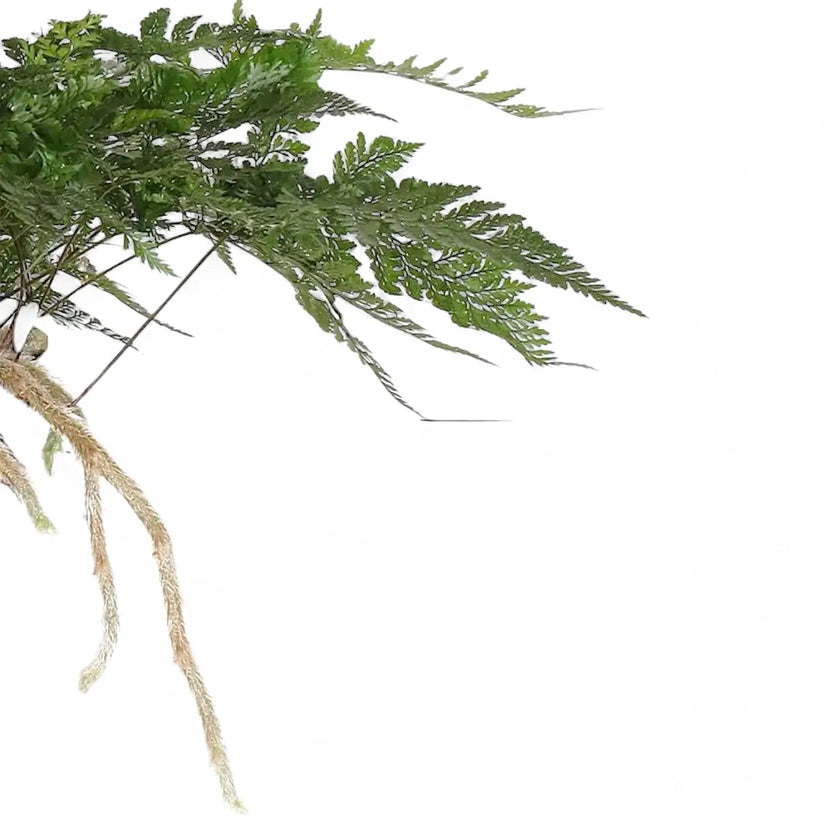
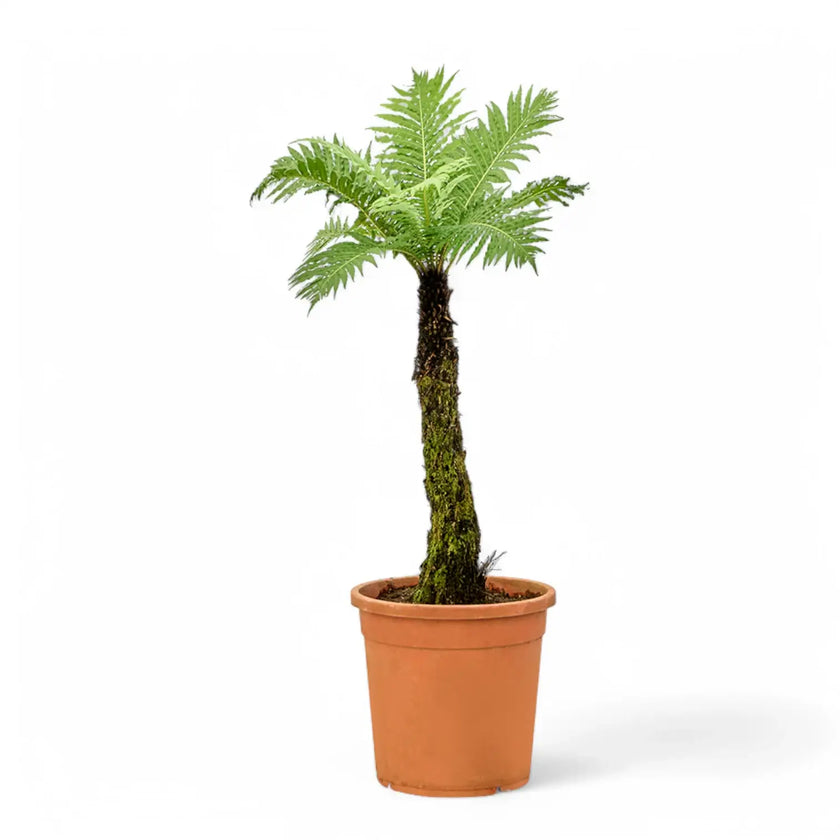
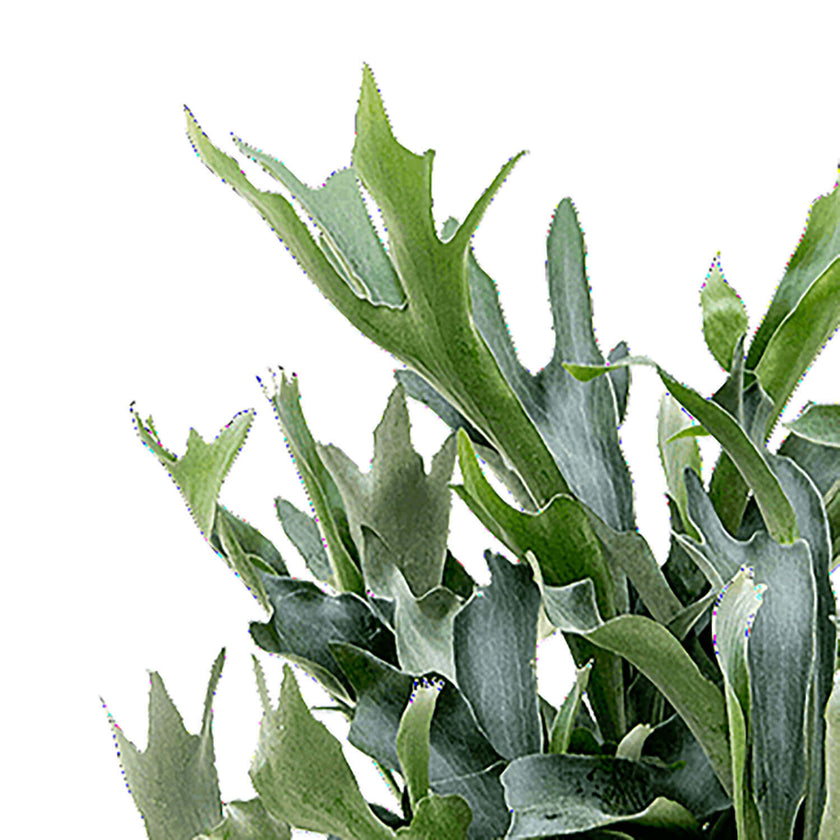
Ferns bring fine texture and softness to an arrangement. Repeated fronds and divided segments fill visual gaps between bolder plants without taking over, so they are perfect for edging, underplanting and softening hard lines.
Most indoor ferns respond best to consistency: they dislike swinging between bone-dry and waterlogged soil. In return for reasonably even moisture and gentle light, they produce fresh fronds regularly and keep a space looking lush rather than heavy. Detailed care temperaments, watering patterns and common mistakes are covered in our indoor ferns care guide.
- Visual role: Light, lacy foliage that breaks up large leaves and straight edges.
- Typical size range: From small pot-friendly clumps to wider, arching plants for larger containers.
- Care pattern: Cope better with steady routines than with long neglect followed by “rescue” watering.
- Pairs nicely with: Aroids and palms, where fronds can sit underneath or between larger leaves.
- Not the best choice if: You keep plants in very dry, hot spots or tend to water only once in a long while.
Turn to Ferns when your display needs softer texture under or between big leaves and you are willing to keep moisture reasonably steady.
Frequently Asked Questions About Ferns
Are ferns hard to keep indoors?
Some are fussier than standard leafy houseplants, but ferns are not automatically difficult. Boston fern usually wants steadier moisture and higher humidity than rabbit’s-foot fern, so success depends more on the type of fern than on the word “fern” alone.
Do indoor ferns like low light?
Most indoor ferns prefer bright indirect light or light shade rather than deep low light. They usually dislike direct sun, but a very dim spot can leave them thin, sparse and weak-looking.
How should indoor ferns be watered?
Not all ferns are watered the same way. Many common house ferns do best when roughly the top 10–20% of the potting mix has dried, while Boston-fern types usually want steadier moisture and rabbit’s-foot or other epiphytic ferns can often dry a bit further before watering again. What they generally do not like is staying sodden for long periods.
Why do fern tips turn brown?
Brown tips usually mean the plant has been too dry, the air has been too dry, or the water quality is poor for that type. Direct sun, cold drafts and roots staying wet for too long can also damage fern growth, so brown tips need context rather than one stock answer.
Are ferns safe around pets?
Many true ferns, including Boston fern and rabbit’s-foot fern, are considered non-toxic to cats and dogs. The catch is that some plants sold under fern names, such as aspaagus fern, are not true ferns and can be toxic.
Limited discounts, extras, and bundle deals for subscribers.
Get points with every order to redeem them for discounts.
Give your friends 10 € off and get 200 Foliage Points.
Use your 10% code on plants when you're ready to order.