
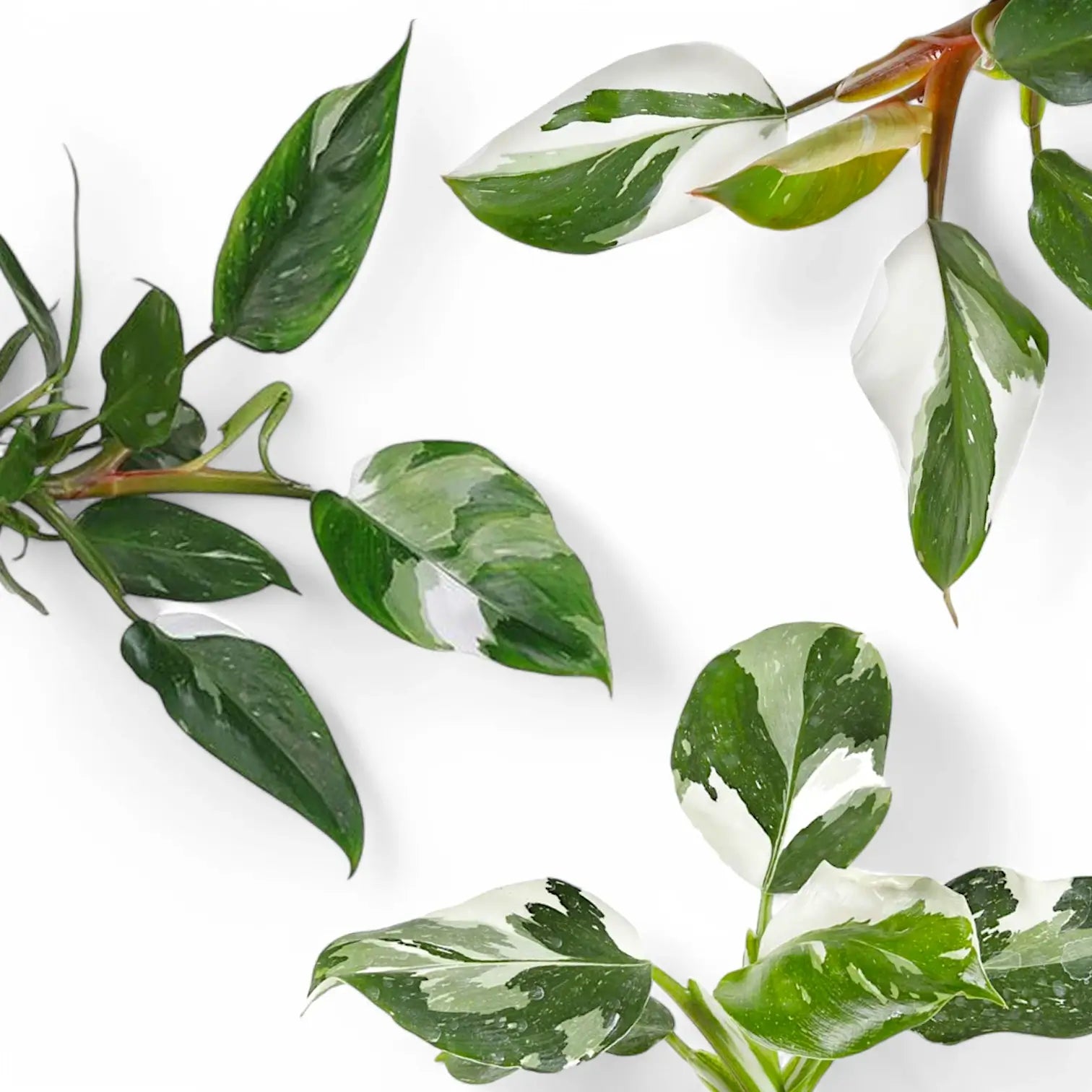
A side-by-side guide to Philodendron 'White Princess', 'White Wizard', and 'White Knight': how to tell them apart, what their variegation does, and how to keep them growing strong indoors.
Read more

Long before it became a fixture on windowsills and plant shelves, Pilea peperomioides grew in a far quieter setting: shaded, damp rock faces in the mountains of south-western China. In those forested ravines, moisture lingers in the air, light arrives softened through canopy cover, and roots grip into thin pockets of organic matter tucked between stone. It is a habitat that explains a lot about how this plant behaves in cultivation. Pilea peperomioides does not want punishing sun, stagnant wet soil, or neglect dressed up as “low maintenance.” It wants balance — brightness without scorch, moisture without saturation, and a potting mix that drains as easily as mountain runoff.
At first glance, its appeal seems almost too simple: a single upright stem, round leaves held out on long petioles, and a shape that looks deliberate from every angle. But that simplicity is exactly why it lasts. Young plants stay compact and tidy. Older plants become more characterful, forming a visible stem and often pushing up offsets from the base. Each new leaf adds to the rhythm of the plant rather than changing its whole identity. You always know what you are looking at, but it never feels static.
Common names like Chinese money plant, pancake plant, UFO plant, and friendship plant have helped turn it into a modern classic, but Pilea peperomioides is more than a nickname magnet. It is a real species with a distinct native range, a recognisable growth pattern, and one of the clearest “pass-it-on” histories in houseplant culture. Long before mainstream retail caught up, it moved through homes by sharing: one pup, one cutting, one handed-over pot at a time.
That is still part of its charm now. Pilea peperomioides looks good in a small flat, a studio, a family kitchen, or a collector’s shelf, but it never feels like décor only. It grows with visible rhythm. It tells you when light is too low. It rewards patient care with new leaves and, often, new plants. And unlike many fashionable houseplants, it stays readable. You do not have to decode it for long to understand what it needs.

Pilea peperomioides is an accepted species in Urticaceae, native to western Yunnan and south-western Sichuan in China. In habitat, it grows on shaded, moist rocks in forests, often where water drains freely and roots sit in only a thin layer of organic material. That origin matters more than most care clichés. It explains why this plant likes even moisture but resents stale, compact soil. It explains why bright indirect light works better than harsh afternoon sun. It also explains why it often stays more comfortable in ordinary indoor temperatures than many people assume from its tropical-looking leaves.
Botanically, this is not a sprawling rainforest climber and not a desert succulent either. It is a semi-succulent herbaceous perennial with a simple, upright habit. Leaves are nearly circular to broadly oval and peltate, meaning the petiole attaches near the centre of the blade rather than at the edge. That single trait gives the plant much of its unusual look. Each leaf seems to float in place, attached from underneath like a green disc on a stem.
Western botanical history started early in the twentieth century, when George Forrest collected the species in Yunnan and Friedrich Diels described it in 1912. Its better-known houseplant story came later. Material that reached Scandinavia in the mid-twentieth century was shared from grower to grower and home to home long before the plant was common in shops. That informal route shaped its public identity far more than any nursery catalogue did. “Friendship plant” is not a botanical term, but it fits the way many people first encountered it: as an offset passed along by somebody who already had too many.
That backstory is worth keeping because it matches the plant itself. Pilea peperomioides is easy to notice, easy to divide, and easy to talk about. Yet the history only makes sense when the plant is understood properly. Its popularity did not come from mystery alone. It came from a species that fits domestic life unusually well: compact when young, structurally interesting with age, and straightforward enough to share without specialist equipment.
There is also a useful correction hidden inside that history. Pilea peperomioides is often treated like a “cute beginner plant” and left at that, but its growth is more nuanced than that label suggests. In ideal conditions, it does not stay forever as a neat juvenile rosette. The stem elongates. Lower leaves age off. The crown rises. Offsets emerge around the base. What starts as a small tabletop plant can become something more architectural and trunked over time. Knowing that makes it easier to appreciate the plant at every stage instead of assuming older growth means something has gone wrong.

Pilea peperomioides is often sold at its neatest stage, so many people never get a proper description of what the plant actually becomes. In cultivation, most specimens stay around 20–30 cm tall and wide for quite a while, though strong indoor plants can eventually exceed that. Leaves usually reach around 4–10 cm across, carried on long petioles that hold them out from the stem rather than stacking them tightly like a rosette. That spacing is part of the plant’s character. It gives each leaf room to read as a separate disc instead of blending into a dense mound.
The blades are smooth, rounded, and peltate, with the petiole attaching near the centre of the leaf underside. Fresh growth is usually a clear mid-green and slightly glossy, while older leaves can deepen in tone before aging out. Seen from above, a well-grown young plant often looks almost radial. Seen from the side, the structure is simpler: one main upright stem carrying a shifting crown of long-stalked leaves. That contrast between the top view and the side profile is one reason the plant feels both graphic and a little unusual.
Maturity changes the shape more than many care labels suggest. The stem usually remains simple rather than freely branching, and with time the lower part becomes more visible as older leaves are shed. Mature plants can look lightly trunked, especially if they have been grown for several years in good light. That is not decline in itself. It is a normal stage in the life of the plant. Offsets from the base or root zone often soften that look by filling in around the mother plant, but a clean-stemmed older specimen is still behaving exactly like Pilea peperomioides should.
Flowers are not the reason most people grow this species, but they are part of the plant profile and worth mentioning properly. The inflorescences are small and unobtrusive, with tiny pale green to whitish flowers that may show a faint pink tint. They do not compete with the foliage and can easily go unnoticed unless you are looking closely. In other words, this is not a plant that suddenly transforms when it blooms. The leaves remain the main event from start to finish.
Pilea peperomioides suits indoor growing for concrete reasons, not because it is “magically adapted” to living rooms. Its native habitat already points toward the conditions many homes can provide: stable temperatures, bright filtered light, and quick drainage around the roots. Give it those, and the plant becomes easy to read.
Its structure helps too. Leaves are fleshy enough to buffer short dry spells, but not so specialised that the plant should be treated like a cactus. Petioles are long and flexible, which lets the crown position itself toward available light. The main stem stays simple unless cut back or offset growth changes the shape. Flowers are small and not the main event. This is a foliage plant in the clearest sense: form, proportion, and leaf rhythm are what matter.
There is a physiological point here as well. Under normal, well-watered conditions, Pilea peperomioides behaves overwhelmingly like a C3 plant. Under water deficit, low-level CAM activity has been documented. In practical terms, that means it has a little more drought flexibility than its soft appearance suggests. What it does not mean is that you should treat it like an arid-climate succulent and let it sit bone dry for long periods. Think of that trait as a bit of built-in tolerance, not a care shortcut. If you want the background without the usual internet confusion, this explainer on CAM and nighttime photosynthesis adds useful context.
Another reason it works indoors is that the plant signals its needs clearly. When light is too low, internodes stretch, petioles lengthen, and the whole crown starts leaning. When the mix stays too wet, lower leaves yellow and the base softens. When the plant is thirsty, leaves lose firmness. It does not usually collapse without warning. It changes shape first. For growers willing to observe rather than water on autopilot, that is a major advantage.
Nicknames have also done some of the cultural work. Chinese money plant points to the coin-like leaves. UFO plant points to the disc-like blades suspended above the stem. Friendship plant reflects its long pass-along history in cultivation. None of those names are necessary to appreciate the species, but they help explain why it has remained visible even while trends shift around it. Some plants cycle in and out because they depend on rarity. Pilea peperomioides keeps returning because its form is genuinely memorable.

If you strip away the nicknames and trend language, caring for Pilea peperomioides is mostly about keeping the plant in the middle ground: bright but not punishing, moist but not waterlogged, fed but not pushed, snug but not cramped. The species is forgiving when those basics are in place, and noticeably awkward when they are not.
Light drives almost everything attractive about this plant. In bright indirect conditions, leaves stay broader, spacing stays tighter, and the crown looks more balanced. Morning sun can be fine, especially from an east-facing window, but prolonged hot afternoon sun can bleach or scorch foliage, particularly if the plant has been grown in gentler light. What hurts Pilea peperomioides most often is not a lack of survival light, but a lack of shaping light. It may remain alive in a dim corner, yet it will become stretched, one-sided, and visibly less compact.
For most homes, the sweet spot is close to a bright window with filtered exposure or soft direct sun early in the day. Rotate the pot regularly so the crown develops evenly. If you need a clearer benchmark for what “bright indirect” really means, this guide on bright indirect light helps translate the phrase into something usable, and this window orientation guide makes it easier to judge whether your space is likely to keep growth compact. It is also worth remembering that “low light” and “no light” are not the same thing; this piece on what low light really means for houseplants explains why survival and good shape are two different outcomes.
Pilea peperomioides likes a regular cycle of moisture and air around the roots. Water thoroughly, then allow roughly the top quarter of the potting mix to dry before watering again. In a small pot in bright light, that can happen quickly. In cooler, darker conditions, it takes longer. The exact schedule matters less than the pattern. Repeatedly keeping the mix heavy and wet is far more dangerous than letting the upper layer dry.
A useful rule is this: do not give tiny sips just to feel productive. Water enough that the full root zone is moistened, let excess drain away, and never leave the inner pot standing in collected water. If you want a fuller breakdown of dry-down, pot weight, and how room conditions change watering frequency, this watering guide is worth keeping nearby.
The best mix for Pilea peperomioides drains quickly while still holding enough moisture for active roots. A standard indoor plant substrate improved with perlite, pumice, or another mineral component works well. Some growers also add fine bark or a little coco coir for structure. What you want to avoid is anything dense, muddy, or slow to dry. A pure succulent mix can be too lean and too fast-drying in some homes, while moisture-retentive tropical mixes can stay wet for too long if there is not enough airflow or light. If substrate choice still feels vague, this guide to houseplant substrates is one of the few broader reads that genuinely helps.
Pot choice influences the rhythm too. Terracotta dries faster and can be helpful for heavy-handed watering. Plastic retains moisture longer and can work just as well if you water with more restraint. Drainage holes matter more than the material. Decorative cachepots are fine, but only if excess water is emptied rather than forgotten.
Despite its polished, graphic look, Pilea peperomioides is not especially demanding about humidity. Average indoor levels are usually fine. Very dry air can crisp leaf edges over time, especially near heaters, but this is not a plant that needs constant misting or a dedicated humidity chamber to look presentable. Temperatures around typical indoor living conditions suit it well. Cooler nights are not a problem; direct heat blasts and cold drafts are.
Place it away from radiators, hot air vents, and doors that swing open to winter air. Stability does more for the plant than chasing perfect numbers.
During active growth, a light monthly feed or a diluted balanced fertiliser every few waterings is usually enough. Heavy feeding does not create a better plant. It more often creates salt buildup, soft growth, or root stress if the mix is already too wet. If you want a clearer framework, this guide to fertilizer for houseplants is the most relevant follow-up here. The short version is still simple: feed lightly, not heroically.
Repot only when the plant has genuinely filled the pot, the mix has broken down, or watering has become unusually frequent because roots dominate the container. A slightly snug fit is fine. Jumping several pot sizes at once is not. One size up is usually enough. Fresh substrate often matters more than a much bigger pot. For step-by-step timing and root-check logic, this repotting guide is useful without being overcomplicated.
One of the most common misunderstandings around Pilea peperomioides is expecting it to remain permanently juvenile. It will not. With time, the lower stem becomes visible, the crown rises, and the plant may start to look more upright and less perfectly radial. That is normal growth. Rotate it to keep the stem from pitching hard toward one direction, and do not panic if older leaves age off from below. If a mature plant becomes too top-heavy or bare-stemmed for your taste, you can reset it by taking a healthy top section with a node and rooting it, or simply keep the plant as a more trunked specimen and enjoy the change in character. Older plants are often the best reminder that good care does not freeze a plant at its cutest stage; it lets the species show its full habit.

Propagation is part of the identity of this species, not just an optional extra. Healthy plants often produce offsets from the base or roots, and that makes multiplication straightforward. This is one reason Pilea peperomioides became such a strong pass-along plant long before it was widely commercialised.
Wait until a pup is large enough to handle — ideally several centimetres tall, with a few leaves and, if possible, some roots of its own. Gently move the surface mix aside and trace where it connects to the mother plant. A clean cut with a sterile blade is better than twisting or tearing. Pot the offset into a small container with a light, well-draining mix, then keep it in bright indirect light while it settles.
Freshly separated pups do not need heavy watering, but they should not be left to dry hard while they are trying to establish. Think lightly and evenly moist rather than wet. Growth may pause for a short while after separation. That is normal.
If your plant grows tall and you want to reset it, a stem section with at least one node can also root. This is useful for older specimens with a bare lower stem and a good crown. Rooting can happen directly in substrate or in water before potting on. Offsets are usually simpler, but top cuttings are a useful second option when maturity changes the shape of the plant more than you want. If you prefer to watch roots develop before potting, this guide to water propagation for houseplants covers the basics without pretending every species enjoys the same method equally.
A leaf without a node is not a reliable way to make a new plant. It may stay green for a while and can sometimes produce roots, but without stem tissue capable of making a new shoot, it will not become a full replacement plant. For dependable results, start with an offset or a cutting that includes a node.
If you want a broader overview of timing, tools, and rooting methods, this guide to houseplant propagation gives a solid framework. With Pilea peperomioides, though, the easiest answer is usually also the best one: wait for pups and work cleanly.

Pilea peperomioides usually tells you what is wrong through shape, not drama. Leaves shift angle. The stem tilts. Lower growth discolours. Paying attention to those signals early is what keeps the plant easy.
This is usually a light issue. The plant is stretching toward its best available source, and the petioles are lengthening as it tries to capture more energy. Move it closer to a brighter window, rotate it regularly, and accept that very dim rooms produce survival growth rather than attractive growth. If your plant already looks leggy, this guide on etiolation and leggy growth explains what can and cannot be reversed.
Not every yellow leaf is a crisis. Older leaves naturally age out, especially once the stem starts lifting the crown upward. But if several leaves yellow at once, or the mix stays wet for long periods, overwatering is the first thing to investigate. Check the base of the plant and the root zone. If tissue feels soft or smells sour, act fast: reduce watering, remove damaged roots if necessary, and refresh the substrate. This guide to root rot treatment is especially relevant if you have let the plant sit wet more than once.
Thirst usually shows up as a loss of firmness rather than immediate colour change. If the mix is dry through a significant portion of the pot, water thoroughly and let the plant recover. Leaves often perk up quickly. That said, droop after repotting, cold exposure, or root stress can look similar. Always check the substrate before assuming the plant is simply thirsty.
Sudden exposure to strong direct sun can mark leaves permanently. This is especially common when a plant has been moved from softer interior light to a south- or west-facing window without acclimatisation. Brown edges can also show up in very dry air or where watering swings are too extreme. Damaged tissue will not green up again, so judge success by the quality of new leaves rather than waiting for old scars to disappear. This guide on sunburn versus sun stress is helpful if you are trying to work out what kind of light damage you are actually seeing.
Light level, age, root establishment, and genetics all play a role. Some plants pup earlier and more freely than others. A recently repotted specimen may focus on root growth first. A young plant with limited light may stay alive but not energetic enough to multiply. More brightness, steady care, and time usually do more than any trick.
Pilea peperomioides is not uniquely pest-prone, but stressed plants can attract the usual indoor suspects. Mealybugs are among the easiest to miss at first because they hide in leaf axils and around the base of petioles. If you spot white cottony clusters or sticky residue, isolate the plant and act early. This guide on identifying and treating mealybugs is the most relevant follow-up if you need one. Fungus gnats can also appear when a mix stays wet too long, which is often a useful clue that watering or substrate structure needs adjusting.
The big picture is simple: strong light, sane watering, clean leaf surfaces, and basic observation prevent most long-term problems better than reactive treatments do.

Some plants stay popular because they are rare. Others stay popular because they fit real life. Pilea peperomioides belongs firmly in the second group. Its leaves are distinct enough to feel memorable, but its care is not punishing. It is compact enough for small spaces, yet architectural enough to hold its own on a shelf or sideboard. It can read as minimal in a clean interior and still make sense among denser, more layered plantings.
The popular name Chinese money plant probably lasted because the leaves do look coin-like at a glance. That visual shorthand matters. People remember shapes. They also remember what a plant does in a home. Pilea peperomioides produces visible new growth, often makes offsets, and changes slowly enough that you can follow its development without needing specialist experience. That makes it satisfying for newer growers and still interesting for people who have kept plants for years.
It is also one of the few mainstream houseplants whose reputation for sharing is deserved rather than sentimental. When a plant naturally makes spare plants, generosity becomes part of cultivation. A pup given away is not a grand event; it is just the next logical step. That practical side of sharing is one reason this species has more staying power than a short-lived trend plant with difficult care and no easy way to multiply it.
Styling-wise, less is usually more. A healthy plant with enough light already has strong geometry. Eye-level placement lets the peltate leaves read properly. Simple pots suit it well because the growth does the visual work. Terracotta emphasises the trunked character of older specimens; matte ceramics make younger plants look sharper and more graphic. Either way, the best styling choice is still a horticultural one: place it where the light keeps the crown compact.

Pilea peperomioides is generally considered non-toxic to cats and dogs, which makes it one of the easier foliage plants to place in homes with curious animals. That does not mean leaves should become a chew toy. Any plant material can still irritate the stomach if enough is eaten, and repeated damage ruins the look of the plant quickly. But compared with many popular houseplants, this species brings much less risk.
If pet-safe plant choices are a priority in your home, this guide to houseplants that are safer around cats is a useful next read.
Pilea peperomioides is now so easy to propagate in cultivation that there is little reason to buy poor-quality, stressed plants or treat scarcity as a selling point. The better choice is a nursery-grown specimen with a firm stem, clean leaves, no obvious pest residue, and a root system that is active but not suffocating in old substrate.
This is one of the rare houseplants where sustainable habits can be very ordinary. Buying a healthy propagated plant, keeping it well for years, and passing on offsets when it multiplies already goes a long way. There is no need to turn that into a moral performance. Just avoid damaged stock, avoid hype pricing for weak plants, and choose growers or shops that clearly maintain clean, well-rooted material.
For new purchases, acclimation matters too. A plant that looked symmetrical and firm in a bright greenhouse can sulk for a few weeks if moved into lower light or colder rooms. That is not failure; it is transition. Judge the plant by its new growth after settling in, not by how perfectly it matches greenhouse form on day one. This guide to houseplant acclimatization is especially relevant if your new plant seems temporarily sulky after delivery or a move.
Usually because the strongest light is coming from one direction. Rotate the pot regularly and move it closer to bright indirect light. If the stem is already elongated, the existing lean may not fully disappear, but new growth can be shaped better.
A little gentle morning sun is often fine. Harsh midday or afternoon sun, especially through hot glass, is much more likely to scorch or bleach leaves. The plant looks best in strong ambient light with only limited direct exposure.
If it is only one older leaf at a time, that can be normal aging as the stem matures. If several leaves yellow together, especially in wet soil, overwatering or root stress is more likely.
It may still be too young, not bright enough, recently repotted, or simply slower by nature. Healthy growth comes before multiplication. More light and stable care help, but patience is part of the answer.
Not reliably. A leaf without a node may stay alive or root, but it will not usually produce a full new plant. Use offsets or stem cuttings with a node instead.
In bright conditions during active growth, it can be moderately fast and quite responsive. In lower light, it slows down and often puts more energy into stretching than into making dense, attractive growth.
No. Average indoor humidity is usually enough. Very dry air can mark leaves over time, but this is not a species that demands constant misting or terrarium-level conditions to succeed.
It can, but the flowers are small and easy to overlook. They are usually pale green to whitish, sometimes faintly pink, and they do not change the plant’s overall look very much. Most growers value this species for foliage and structure rather than bloom.

Pilea peperomioides has lasted because it earns its reputation. Native to shaded rocky habitats in south-western China, it brings that background into cultivation in a very readable way: bright light without scorch, fast drainage without chronic drought, and a compact but changing structure that becomes more interesting with age. It is not just a neat juvenile rosette and not just a trend-era houseplant. It is a species with real history, clear morphology, and a habit of multiplying itself into other homes.
That is what makes it satisfying to grow. New leaves arrive with regularity. The stem records age. Offsets turn good care into new plants. Even its imperfections — a lean toward the window, a trunked stem over time, a pup rising from the soil — add personality rather than take it away.
If you want a plant that is visually clear, genuinely shareable, and much easier to understand than its popularity sometimes makes it seem, Pilea peperomioides is still one of the best choices around.
Choose a healthy, well-rooted plant, give it bright indirect light and a free-draining mix, and let the story continue in your own space — first as one plant, and later, if all goes well, as several.
The references below informed this article and are also worth reading if you want the plant background, taxonomy, physiology, and horticultural context in more detail.
A side-by-side guide to Philodendron 'White Princess', 'White Wizard', and 'White Knight': how to tell them apart, what their variegation does, and how to keep them growing strong indoors.
Read more
Spider Mites on Houseplants — Exact Steps to Stop Them for Good
White speckles, dull leaves, “dust” that moves? This guide shows the rinse–coat–repeat routine that actually wipes out spider mites. You’ll get early ID tips, a 90-second action plan, what works (a...
Read more