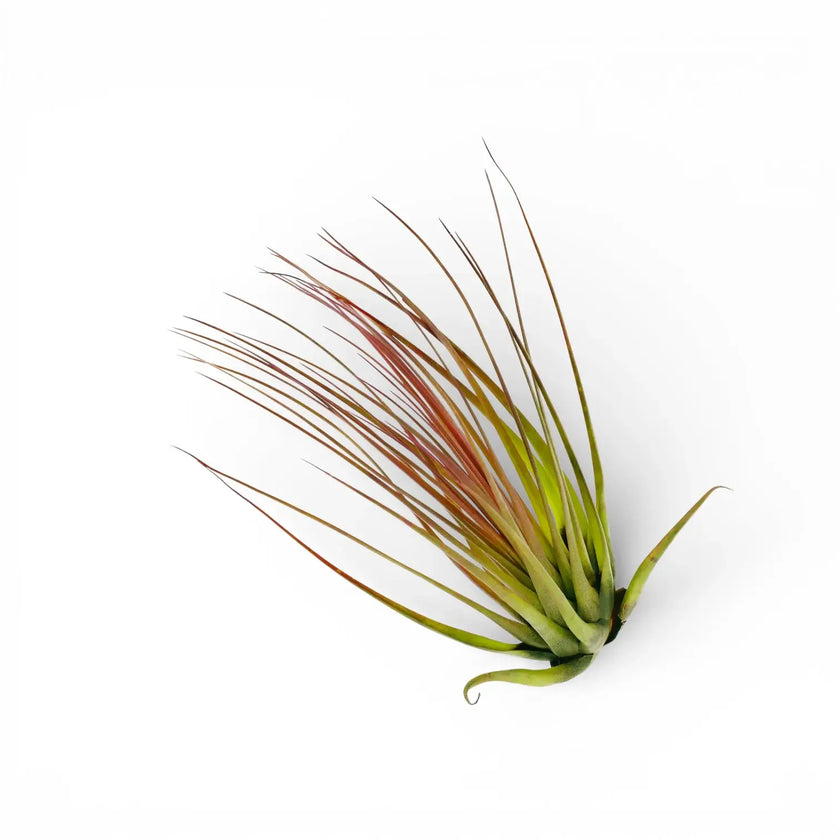
Tillandsia: sculptural air plants for shelves, mounts and frames
Tillandsia-air plants that live on more than “just air”
Tillandsia is a large bromeliad genus of more than 600 species, native from the southern United States through Central and South America. Many are true epiphytes: they grow on trees, rock faces or even telephone wires, anchoring with wiry roots while specialised leaf scales (trichomes) absorb water and nutrients from rain, dew and mist. Others are lithophytes on rocks or even terrestrial, but all share the same basic strategy-most of their work is done by the leaves, not the roots.
As “air plants”, Tillandsia lend themselves to creative displays: mounted on cork or driftwood, tucked into shells, hung in wire frames or perched on stands. They are compact and architectural, with forms ranging from grassy fountains to tight rosettes and twisted, sculptural species. They are not maintenance-free décor, though-they need regular watering, good light and ventilation to stay healthy.
Is Tillandsia a good match for your space?
- Where Tillandsia shines: bright but not baking windows, spots with some height for hanging or trailing, and homes where someone is happy to give plants a proper soak or thorough misting at sensible intervals and then let them dry in moving air.
- Less ideal when: your rooms are very dark, you rely on strong midday sun to keep plants alive, or you tend to forget watering for weeks at a time. Tillandsia will not thrive long-term sitting in a dark corner or under a cloche with no airflow.
- Before you choose a Tillandsia: note that greener, softer-leaved species usually prefer a bit more shade and moisture, while very silver, fuzzy, stiff-leaved types are adapted to brighter, drier conditions. Mixed arrangements look great but are easier to maintain if you group plants with similar needs.
Tillandsia in the wild-canopy bromeliads of the Americas
In habitat, most Tillandsia cling to tree branches or rocks in open woodlands, cloud forests and scrub, often high above the ground. They experience strong but filtered light, frequent moisture from rain, mist or dew, and-most importantly-excellent drainage and ventilation. Water runs over their surfaces and away; it does not sit around their bases for long.
Roots are primarily for anchorage. The real “feeding surface” is the foliage, coated in trichomes that can rapidly absorb water and dissolved nutrients, then dry out again. This epiphytic way of life is why Tillandsia do well mounted or in airy holders indoors, provided you recreate that cycle of wet-dry and moving air.
Tillandsia light & placement-bright shade, never desert sun
Tillandsia are adapted to forest canopies and open, bright sites rather than exposed desert slopes. Indoors they thrive in medium to bright, indirect light. A position near an east- or north-facing window, or a little back from a brighter south or west window behind a sheer curtain, suits most species well. In this kind of light, plants stay compact, colours are clear and they are more willing to pup and flower. For benchmarks, see our bright-indirect light guide.
In low light, Tillandsia may grow slowly, stretch and lose vibrancy. In strong midday sun, especially through glass, leaves can bleach, turn reddish or brown and shrivel at the tips.
Tillandsia water & how to actually hydrate air plants
Despite the name, air plants do not live on air alone. In their native habitats, they receive frequent moisture from rain, mist and dew. Indoors, you can mimic this in two main ways:
- Soaking: submerge the plants (excluding any attached metal or base that might rust) in lukewarm water for 15-30 minutes, then shake gently and place them upside-down or on their sides in good air movement until they dry fully.
- Thorough misting: for plants that are hard to remove from displays, mist them heavily until water runs from the leaves, then allow them to dry completely before the next watering.
Under typical indoor conditions, most Tillandsia benefit from a regular cycle of thorough wetting followed by a complete dry-out within a few hours. In very dry rooms or during warm weather this may mean soaking or heavy misting more often; in very humid environments you may need to water less frequently. The key is that plants should be fully hydrated at intervals, but never left damp at the base for long stretches. Our watering guide for houseplants gives more background on how wet/dry cycles work.
Tillandsia temperature, humidity & airflow
Tillandsia are generally happiest in the same temperature range as most people: around 18-26 °C. Brief dips a little lower are often tolerated if plants are dry at the time, but prolonged cold, especially combined with moisture, can cause rot. Avoid placing air plants against cold winter glass or directly above radiators where hot air rises and dehydrates them quickly.
Moderate to high humidity suits most Tillandsia, particularly softer, greener species. However, high humidity without airflow is dangerous. If you grow them mounted in open air, in a cabinet or as part of a paludarium, prioritise gentle air movement-from a fan on low, passive ventilation or open mesh displays, so they dry within a few hours of watering. Constantly wet, stagnant air is far more of a problem than a slightly lower humidity with good circulation. For ranges and trade-offs, see our humidity guide.
How Tillandsia grow, pup & flower
Tillandsia grow from a central rosette or stem, producing new leaves from the centre. When mature, many species send up a flower spike with colourful bracts and small tubular flowers. After flowering, the mother plant will gradually slow down; it may not produce many more leaves, but it will form offsets (pups) at the base or along the stem.
You can leave pups attached to form a clump, which often looks more dramatic, or remove them once they are about one-third to half the size of the parent. To separate a pup, gently twist it away or cut it off with a sterile blade, keeping as much base tissue intact as possible, and mount or place it in a similar position to the parent. Avoid cutting into the central growing point of the plant-damage there can prevent further growth.
Tillandsia and pet safety
Tillandsia (air plants) are generally considered non-toxic to cats, dogs and people. They do not contain the calcium oxalate crystals found in many aroids, and they lack the large spines of many desert cacti, which makes them a gentler choice in pet-friendly homes.
As with any ornamental plant, eating large quantities of foliage can still upset digestion, so it is best to keep Tillandsia out of reach of pets that like to chew. Because they are often used in open displays, choose positions where they won’t be batted down or carried off regularly by curious animals.
What you may notice when Tillandsia arrive after delivery
A few days in a box is a jolt for a plant that is used to steady warmth and gentle light. Tillandsia may arrive a little softer or duller than freshly watered plants, with some slightly browned tips or scuffed segments. These are cosmetic issues and usually improve as you settle into a good care routine.
After unpacking, let the plants breathe for a short while, then give them a thorough soak in lukewarm water for 20-30 minutes. Shake off excess water and place them upside-down or on their sides in bright, indirect light with good airflow until they are completely dry. Once dry, mount or position them where you plan to keep them. Avoid gluing over the central base or trapping them in fully closed containers with no ventilation. For more advice on helping new plants adjust, see our houseplant acclimatisation guide.
Tillandsia troubleshooting-common issues & how to respond
- Tillandsia stems and tips shrivelling or turning brown: usually a sign of chronic underwatering or very dry air. Check how often you are soaking or thoroughly misting and increase the frequency or duration as needed, keeping plants away from strong heat sources.
- Tillandsia base turning brown and mushy: indicates rot from staying wet too long without drying. Remove affected tissue if possible, improve airflow and reduce soaking time and frequency until the plant stabilises.
- Tillandsia looks dull grey and stalled, leaves feeling papery: may be receiving too little water, too little light, or both. Reassess your watering pattern and consider moving the plant closer to bright, indirect light.
- Tillandsia turning red or bleached on the sun-facing side: a response to excessive direct sun or heat. Shift the plant further from the window or filter the light with a sheer curtain so it stays bright but diffused.
- Tillandsia with fine webbing, sticky residue or speckled foliage: may be suffering from spider mites or scale insects. Rinse plants gently, improve airflow and humidity, and follow a consistent, gentle treatment plan until new growth appears clean; see our pest articles under the pest-control tag for options.
Back to top and choose the Tillandsia that fits your light, your airflow and the way you want to display it ↑