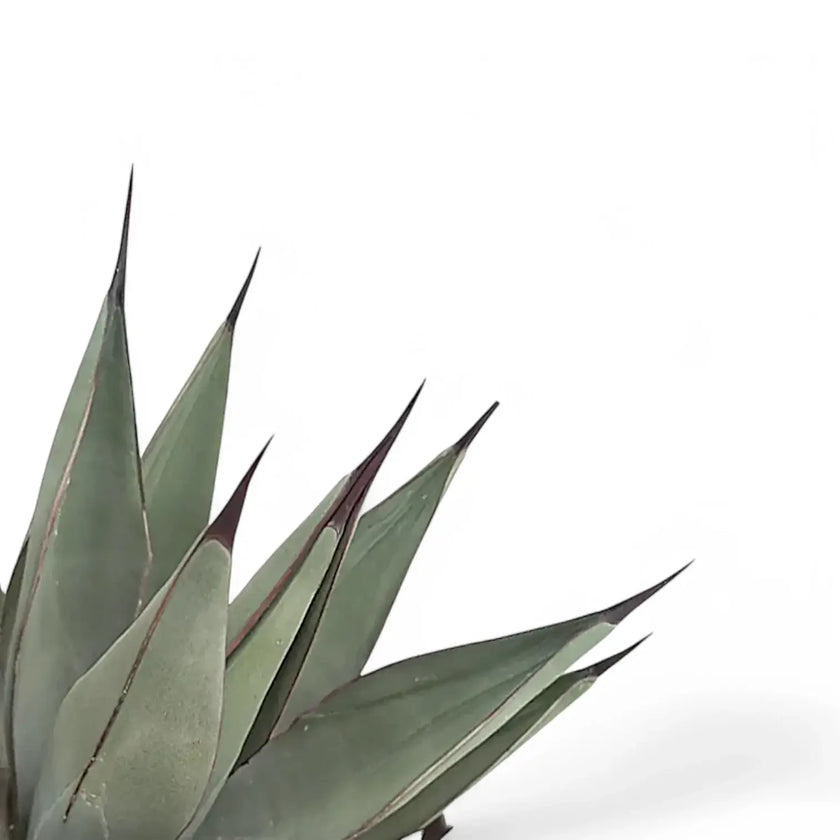
Agave indoors-sculptural succulents with simple rules
Why Agave earns a bright spot
Agave brings serious structure into a room: bold rosettes, firm leaves and crisp outlines that look almost engineered. Where softer succulents blur together, Agave reads as a focal point from across the space, especially in simple containers and minimal interiors.
Growth is deliberate rather than frantic. Under strong light and with sharp drainage, new leaves stack slowly from the centre, older ones age cleanly and the silhouette stays stable for years. When something is off-weak light, cool soggy mix-the plant broadcasts it as stretch, rot or a stalled rosette, so you are not left guessing.
Desert origins-what Agave usually needs from a pot
Most Agave species come from arid and semi-arid landscapes with intense sun, stony soils and long dry periods broken by heavier rain. Roots run through mineral, fast-draining substrate that sheds water quickly and traps plenty of air around the root zone.
Indoors that boils down to three non-negotiables: high light, a mineral-heavy mix and a watering pattern that alternates between a deep soak and an honest dry-down. Soft, peat-dominated compost and permanent “slightly damp” conditions are exactly what Agave is not built for. If you want to see how these desert succulents differ from jungle-type succulents in more detail, check our arid vs jungle succulents guide.
Light for compact, coloured Agave
Indoors, Agave wants as much light as you can realistically offer. Bright south- or west-facing windows, winter gardens and positions under strong LED grow lights are ideal. Aim for several hours of direct sun or very high indirect light each day so rosettes stay low, dense and well coloured.
In low or medium light, plants stretch upwards, leaves lengthen, colour dulls and growth becomes soft. On the flip side, moving a shade-grown Agave straight into intense sun will burn exposed tissue; you will see pale, papery blotches on the sun-facing leaves. Increase light stepwise and, if needed, follow the suggestions in our full-sun houseplants guide to avoid shock.
Watering and building a proper Agave substrate
Practical routine: water Agave thoroughly, then let the mix dry almost completely before you even think about watering again. The pot should feel much lighter than it did just after watering, and both top and lower layers of the mix should feel dry or only faintly cool to the touch. When you do water, soak the entire rootball until water runs freely from the drainage holes, then drain everything away.
Frequent “sips” into already damp, cool mix keep roots in a stressed, low-oxygen state and often start rot at the base of lower leaves. Endless neglect, especially in hot, bright positions, eventually gives shrivelled, curling leaves and stalled centres-but that is usually easier to correct than overwatering. If in doubt, waiting another day is safer than topping up a pot that still feels cool and heavy; the checks in our watering guide translate well to Agave.
Substrate should be sharply draining and heavily mineral. Think of a lean cactus soil boosted with a serious fraction of pumice, lava rock, coarse sand or fine gravel. The goal is a mix that never collapses into a brick and lets water run through quickly while roots sit in a well-oxygenated skeleton. For recipes and particle-size logic, see our substrate deep dive.
Temperature, humidity and airflow Agave accepts
Agave handles typical indoor temperatures well and is happy around 18-28 °C. Many species shrug off short cooler spells, but prolonged exposure below roughly 10 °C, especially in wet mix, pushes plants towards rot and leaf damage. In practice that means avoiding cold, drafty winter sills where pots stay chilled and damp.
Dry, moving air suits Agave. Average household humidity is plenty, and misting is unnecessary. What matters is steady airflow around rosettes and soil surface so leaves dry quickly and moisture does not sit at the crown or between tightly packed leaves for days.
Growth pattern and feeding-slow and steady
Agave grows as a rosette-forming succulent. New leaves emerge from the centre; older ones age outwards and can be removed once fully dry or badly damaged. Some species offset and form clumps, others hold a single rosette for years. Growth rates are slow to moderate, which is part of the draw-they hold a consistent outline rather than reinventing themselves every few months.
Feeding needs are modest. A gritty, mineral substrate already limits excess. During periods when Agave is clearly making new leaves, a diluted succulent or general houseplant fertiliser applied occasionally onto already moist mix is enough. Strong, frequent feeding encourages faster but softer growth with weaker cell walls, which is more vulnerable to rot and mechanical damage. Light and drainage should always be solved before you reach for fertiliser.
Toxicity and handling Agave safely
Many Agave species contain irritant sap and saponins in leaves and roots. Chewing or swallowing parts of the plant can cause gastrointestinal upset in pets and people. Stiff tips and sometimes serrated margins can also scratch skin and eyes if plants are placed where people brush past them.
Position pots away from narrow walkways and play areas, and handle Agave with a bit of respect-gloves make removing old leaves and repotting much more comfortable. Avoid contact between sap and eyes or broken skin.
What usually happens to Agave after shipping
Transit often leaves Agave with cosmetic blemishes: slight bruises, superficial scars on older leaves or minor creases from packing pressure. These marks do not affect long-term health and are usually confined to outer foliage.
After unboxing, move plants straight into strong light with stable temperatures and check how dry the rootball is. Water only if substrate has largely dried during transit; if it still feels cool and slightly moist, wait. Growth may pause briefly while Agave adjusts, but once light and watering are consistent, centres will resume pushing new leaves. For general acclimatisation patterns across houseplants, see our acclimatisation guide.
Agave troubleshooting-quick diagnostics
- Rosette stretching and leaning at the window: light is far too low. Move Agave much closer to a bright window or under strong grow lights so it receives several hours of high-intensity light every day.
- Lower leaves turning mushy from the base in damp mix: rot from constant moisture and poor drainage. Remove affected leaves, allow the mix to dry more deeply between waterings and, if necessary, repot into a much grittier substrate.
- Bleached, papery leaf tips or patches: sunburn from a sudden jump to intense sun. Trim only fully dead tissue, shift the plant slightly back from the glass or provide light shading, and increase exposure more gradually next time.
- Leaves shrivelled, curling inward and pot extremely light: prolonged drought beyond what roots can handle. Soak thoroughly, drain well and adjust your routine so the pot never sits dust-dry for long stretches.
- White cottony tufts or brown scales at leaf bases: mealybugs or scale hiding in tight junctions. Remove manually where possible, isolate the plant and treat with appropriate pest control while improving airflow and avoiding sticky fertiliser residues.
Back to top and pick the Agave rosettes that deserve your brightest, driest window ↑