

Xanthosoma
Xanthosoma gathers bold tropical aroids with arrow- to elephant-ear foliage held on sturdy upright stalks. Indoors they read as warm-growing root-heavy plants that want bright filtered light, an airy rich mix and steadier moisture than drier houseplants can handle.
Xanthosoma brings more visual weight than smaller arrowleaf aroids, which is exactly why it feels so lush indoors. Once light, root room and moisture all stay generous, it delivers a heavier warmer tropical effect than many compact aroids can manage.

About Our Filters
Filters help you narrow things down fast and without guessing. We put a lot of time and effort into keeping filter values consistent across the shop by cross-checking references and validating them against real-world indoor growing and handling.
Use them as guidance, not guarantees. Homes vary a lot, so for the full context (and any exceptions), open the product page and read the description.
How filtering works
- Filters stack: each selection narrows results.
- Multiple picks in one filter are usually either/or within that filter.
- Undo anytime: click a selected option again (or clear filters).
Safety
- Non-toxic: not known for relevant chemical toxicity for common pets (chewing can still cause irritation).
- Non-toxic & Pet Friendly: stricter shortlist that also avoids many physical hazards like spines, sharp tips, thorns, and bristles.
Common care filters
- Light level: Low indirect → Full sun/direct.
- Water Needs: Low / Medium / High.
- Humidity Level: Normal (40–50%) / Moist (50–60%) / Humid (60–80%+).
Growth & size
- Growth Habit: climbing, trailing, crawling, upright, self-heading, clumping, rosette.
- Needs support? none / optional / needed.
- Delivered size: pot size + plant height at shipping.
- Max size indoors: realistic long-term height + spread indoors.
Looks & botanical browsing
- Leaf Shape & Size + Foliage Colour: quick visual categories.
- Plant Type / Genus / Family: browse by broad group or taxonomy.
If you want to see the references we use, Plant Care Resources is simply a curated list of source links (POWO, Kew, and more).
Sort by
Filters


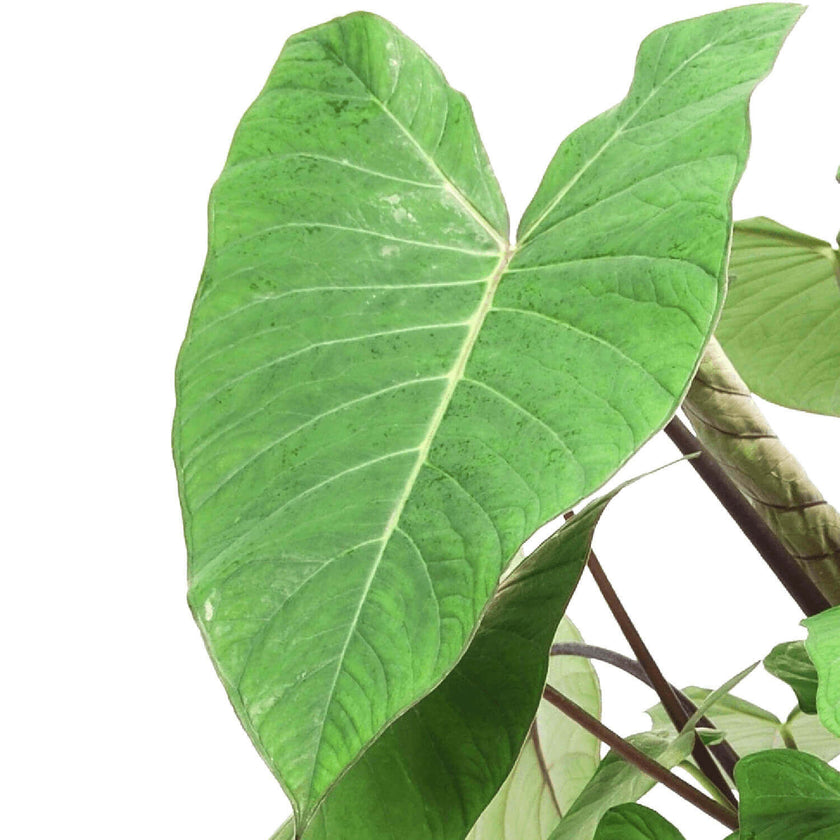
Xanthosoma dealbatum
Sold out


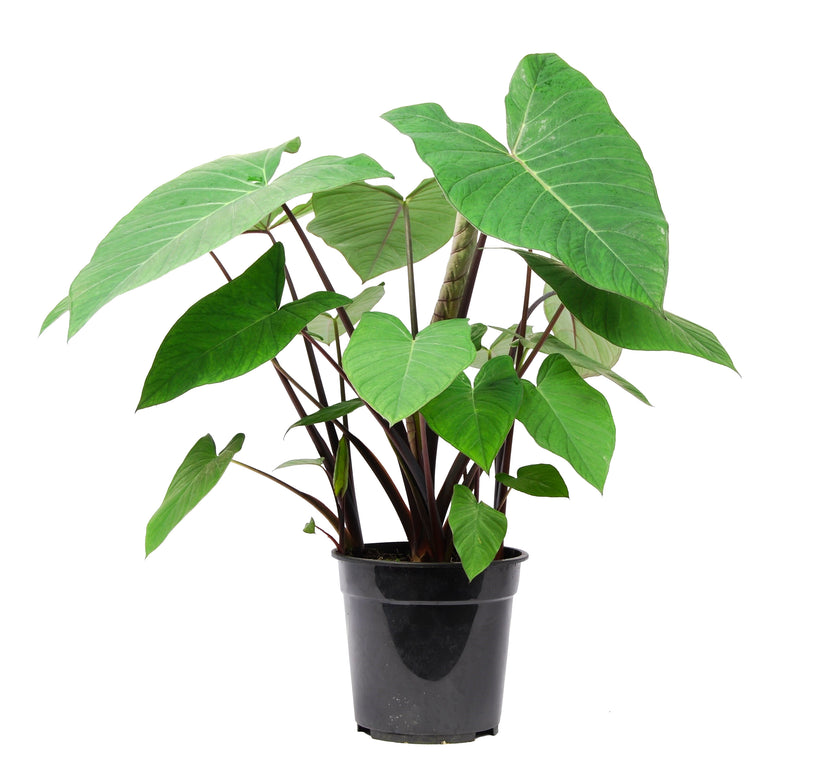
Xanthosoma sagittifolium 'Mickey Mouse'
Regular price
€13,50
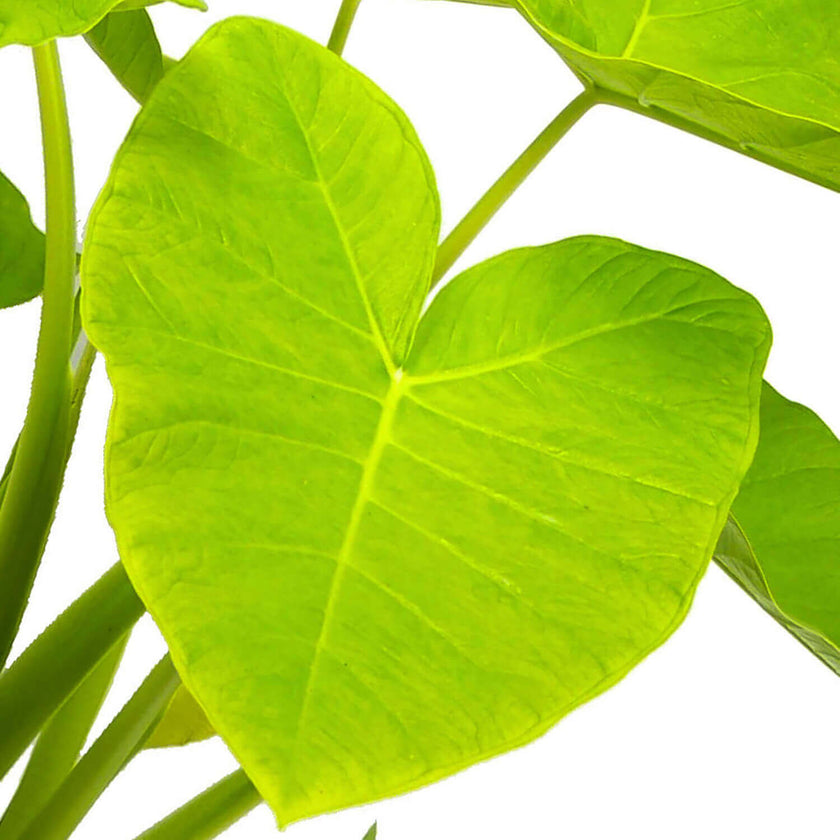

Xanthosoma sagittifolium ‘Lime’
Sold out
Araceae
Xanthosoma
Quick Overview
Xanthosoma: bold “elephant ear” foliage with needs
- Role: large, arrow- or heart-shaped leaves on strong petioles; chosen as a big-leaf focal plant in bright rooms.
- Light: bright, indirect light or gentle morning/late sun; low light gives small, leaning leaves, hard midday sun burns them.
- Watering: keep substrate consistently moist but not waterlogged; tuber and thick roots fail fast in cold, soggy soil.
- Substrate: needs rich, open aroid mix with bark and mineral pieces so water drains freely around heavy roots.
- Climate: prefers warm, humid conditions; chilled, wet soil is a common route to tuber loss.
- Toxicity: raw plant parts are irritant; treat ornamental Xanthosoma as non-edible and keep away from pets and children.
Botanical Profile
Worth knowing: Large, leafy plants can soften echo in hard rooms a little by breaking sound and light instead of letting it bounce cleanly.
Details & Care
Xanthosoma: bold elephant-ear foliage for bright indoor jungles
Xanthosoma: elephant-ear aroids with edible cousins
Xanthosoma is a neotropical aroid genus native from Mexico through Central and South America and the Caribbean. In the wild these plants range from tuberous forest herbs to bold, erect-stemmed species with huge, arrow-shaped leaves. Some species, such as Xanthosoma sagittifolium, are grown as food crops (“new cocoyam”, “tannia”), while others are prized purely for foliage: heavy-textured greens, blue-green spears and intricately patterned or variegated leaves.
Indoors, Xanthosoma reads as serious foliage: large, often architectural leaves on clumping or short-stemmed plants that bring strong vertical and horizontal lines to a room. Variegated and patterned forms can be focal specimens, while solid green or bluish types give a more jungle, “big leaf” look under and alongside smaller aroids.
Is Xanthosoma a good match for your space?
- Xanthosoma fits well when: you have bright but filtered light, stable warmth, room for a plant that can reach 60-150 cm tall, and you are comfortable keeping a rich, airy mix consistently moist without letting it stay swampy.
- More demanding if: your home is very dark, you prefer plants that stay small and never need repotting, or you tend to water by habit rather than by feel. Xanthosoma resent cold, compacted, saturated soil and will not perform long term in gloomy corners.
- Before you choose a Xanthosoma: consider if you want a large, bold “elephant ear” look (for example X. robustum, X. sagittifolium) or a smaller, patterned species and cultivars that suit table- or plinth-sized displays. All share a preference for humidity and consistent moisture, but their eventual footprint can differ dramatically. For a realistic sense of pace on foliage colour, see our coloured-variegation guide and variegated-plant care guide.
Xanthosoma in the wild-wet forest herbs and rock dwellers
In habitat, many Xanthosoma species grow in wet tropical forests as understory herbs or along forest edges and riverbanks. Tuberous or rhizomatous forms push leaves up from the ground in seasonal flushes, sometimes going partly dormant in drier or cooler periods. Erect-stemmed species form bolder clumps or short “trunks” rooted in rich, well-drained soil or in pockets of organic matter over rock.
They experience bright, broken light, regular rainfall and high humidity, with water draining away quickly from their roots. This pattern translates directly to indoor care: Xanthosoma wants bright shade, generous but well-managed watering and a substrate that never compacts into a cold, airless mass.
Xanthosoma light & placement-bright shade with room to expand
Xanthosoma appreciate more light than many delicate understory aroids, but not harsh, overhead sun. A spot near a large east-facing window, or a little back from a bright south- or west-facing window with sheer curtains, usually gives it what it needs. In this range, petioles stay sturdy, leaves reach a fuller size and the plant holds a broad, balanced canopy. Our bright-indirect light guide and window-orientations article give concrete examples.
Too little light leads to long, leaning petioles, reduced leaf size and a loose, weak clump. Prolonged, direct midday sun-especially through glass-can scorch thin lamina, showing first as pale, faded areas and then as sharp brown patches.
Xanthosoma roots, watering & substrate
Xanthosoma develop strong root systems from tubers, rhizomes or a basal stem. These roots need both moisture and air. A heavy, peat-rich mix that stays wet for days around thick roots or tubers is one of the commonest causes of problems indoors.
Use a rich but open aroid-style mix: a peat-free potting substrate combined with fine bark, coco chips and a mineral component such as pumice or coarse perlite. For large plants, choose a wide, stable pot with drainage holes; for smaller, patterned species, a proportionally smaller but still well-drained container is better than an oversized, waterlogged one. Our aroid substrate guide and ultimate substrate guide explain how to build and tweak these mixes.
Before watering, check how the mix and pot feel rather than going by the calendar. Wait until the top few centimetres of substrate look drier and feel dry to the touch and the pot feels lighter when lifted. Then water slowly and thoroughly until excess runs from the drainage holes, and always empty any outer cover pot or saucer so the roots are not standing in stale water. Drying time will vary with pot size, mix and light, so adjust your frequency to how quickly your particular container actually dries.
Permanently wet, air-poor mix leads to yellowing lower leaves and soft, dark roots; letting the plant swing from soaked to dust-dry produces drooping, curled leaves and, over time, dieback from the tuber or stem. If you notice a sour smell, blackened roots or a collapsing crown, unpot the plant, remove all soft or rotten tissue and reset it into fresh, airy mix. Our root-rot guide and watering guide go through this process step by step.
Xanthosoma temperature, humidity & airflow
Xanthosoma come from warm climates and are most comfortable indoors between about 20 and 28 °C. Brief dips a little lower are often tolerated if the substrate is only lightly moist, but cold, wet conditions are a classic trigger for decline. Avoid placing large pots directly on cold tiles or in the path of repeated cold draughts from doors and windows.
Humidity makes a noticeable difference. Medium to high relative humidity (around 60-70 %) keeps the large leaf blades smoother and reduces tip burn, especially in centrally heated homes. Grouping plants, using a small room humidifier or giving Xanthosoma a position away from radiators and hot air vents all help. At the same time, some gentle air movement is important to dry broad leaves between waterings and prevent fungal spots where foliage overlaps or presses against walls. For target ranges, see our humidity guide.
Xanthosoma growth, pruning & styling
Xanthosoma grow as self-heading plants rather than vines. New leaves emerge from the crown or from short, thick stems, unfurling into arrow-shaped or pinnatifid blades. Older leaves age and can be removed cleanly at the base once they yellow or become badly marked. Over time, many species form impressive clumps or short trunks that give a distinctly “tropical garden” feel indoors.
Pruning focuses on tidying and managing size. Remove spent leaves and any long, weak petioles that spoil the outline. If a plant has outgrown its space, you can sometimes reduce the crown by removing a few of the oldest petioles at a time rather than cutting everything back in one go. Rotating the pot regularly helps keep growth even and prevents the plant from leaning towards the light.
Xanthosoma and pet / food safety
Although some Xanthosoma species are used as food crops after careful preparation, all parts of the fresh plant contain calcium oxalate crystals and other irritant compounds. These can cause burning and swelling of the mouth and throat if chewed by pets or people. Raw tubers and leaves are not safe to eat straight from a potted plant.
For safety, treat Xanthosoma as ornamental only. We do not recommend experimenting with home preparation of ornamental plants as food. Keep them away from pets and young children that like to chew foliage, and dispose of pruned material rather than leaving it in the pot. When handling the plant, especially when cutting into stems or tubers, wash your hands afterwards and avoid touching your eyes.
What you may notice when Xanthosoma arrives at home
Large-leaved plants are prone to cosmetic damage in transit. It is normal for a new Xanthosoma to arrive with a few creased or lightly torn leaves, some yellowing at the oldest leaves or a slight droop if the box experienced temperature or moisture changes.
After unboxing, remove loose packing material and any leaves that are clearly broken or badly damaged. Place your Xanthosoma straight into its intended bright, sheltered position rather than moving it from room to room. Check the substrate a few centimetres down: if it feels very dry and the pot is light, water thoroughly and let the excess drain; if it is still evenly moist, wait a few days before watering. Avoid repotting immediately unless the root ball is unstable or the mix is clearly degraded. Over the next weeks, watch for firm new leaves and steady expansion of the clump as the best sign that your plant is settling. For general acclimatisation tips, see our houseplant acclimatisation guide.
Xanthosoma troubleshooting-quick diagnostics
- Xanthosoma leaves yellowing from the base while the mix stays wet: often indicates overwatering or a heavy, air-poor substrate. Let the top of the mix dry further between waterings and consider repotting into a looser blend.
- Xanthosoma leaves drooping and edges browning with very dry soil: a sign of underwatering. Give a deep soak, then adjust your routine so the mix never swings from saturated to dust-dry.
- Xanthosoma petioles leaning hard towards the window and leaves shrinking: light is insufficient. Move the plant closer to a bright window or add a suitable grow light to increase the daily light dose.
- Brown, scorched patches on Xanthosoma leaves: usually from direct, hot sun through glass. Shift the plant further from the window or introduce sheer curtains so light stays strong but diffused.
- Speckled, sticky or misshapen Xanthosoma foliage: may signal sap-sucking pests such as spider mites, thrips or aphids. Inspect both leaf surfaces and petioles, rinse the plant gently if possible and begin a consistent, appropriate treatment before damage spreads; our pest articles under the pest-control tag walk through options.
Back to top and pick the Xanthosoma that suits your warmth, your space and how dramatic you want the foliage to feel ↑
Frequently Asked Questions About Xanthosoma
Are all plants sold as Xanthosoma still botanically Xanthosoma?
No. Some older trade names still circulate, so this collection should be read as common ornamental xanthosoma types in houseplant trade rather than as a perfect one-to-one reflection of current taxonomy.
Is Xanthosoma the same as Alocasia or Colocasia?
No. They are different aroid genera, even though all three can be sold under broad names like elephant ear.
How often should I water common indoor Xanthosoma?
During active growth, water when roughly the top 15–25% of the pot has dried. In cooler or dimmer conditions, let closer to the top 30–40% dry first.
Does Xanthosoma usually stay small indoors?
Usually no. Common ornamental types are better treated as medium to large foliage plants than as long-term small-space shelf plants.
Why are older Xanthosoma leaves dropping as new ones grow?
That is often normal to a point. Xanthosoma regularly sheds older leaves as it pushes new growth, especially when light is modest or roots are crowded. Fast yellowing across several leaves at once usually points to watering or root stress.


Limited discounts, extras, and bundle deals for subscribers.
Get points with every order to redeem them for discounts.
Give your friends 10 € off and get 200 Foliage Points.
Use your 10% code on plants when you're ready to order.