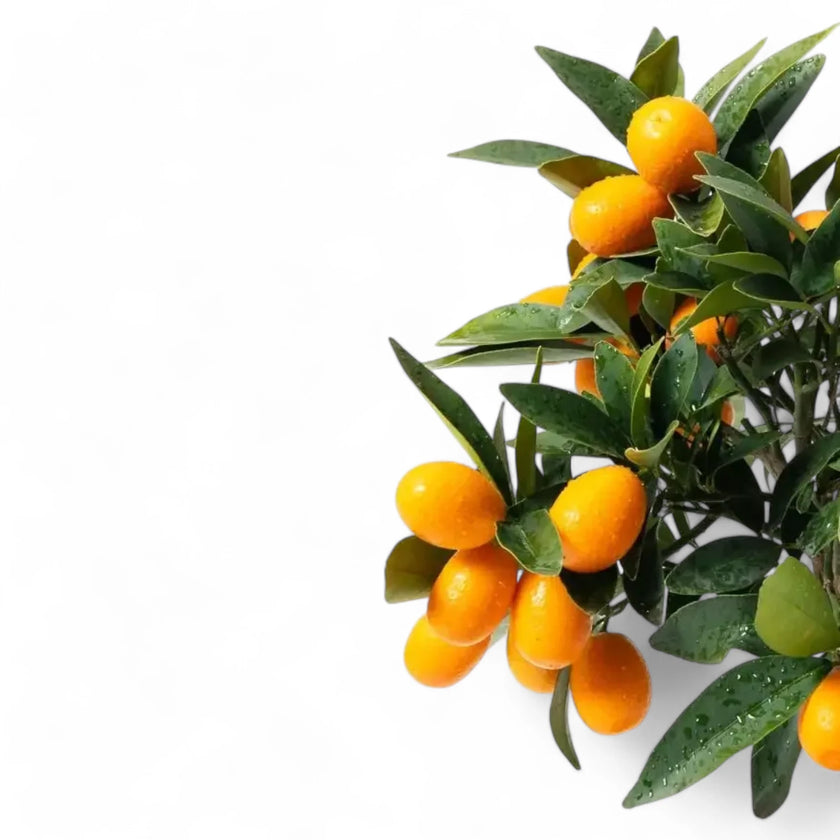
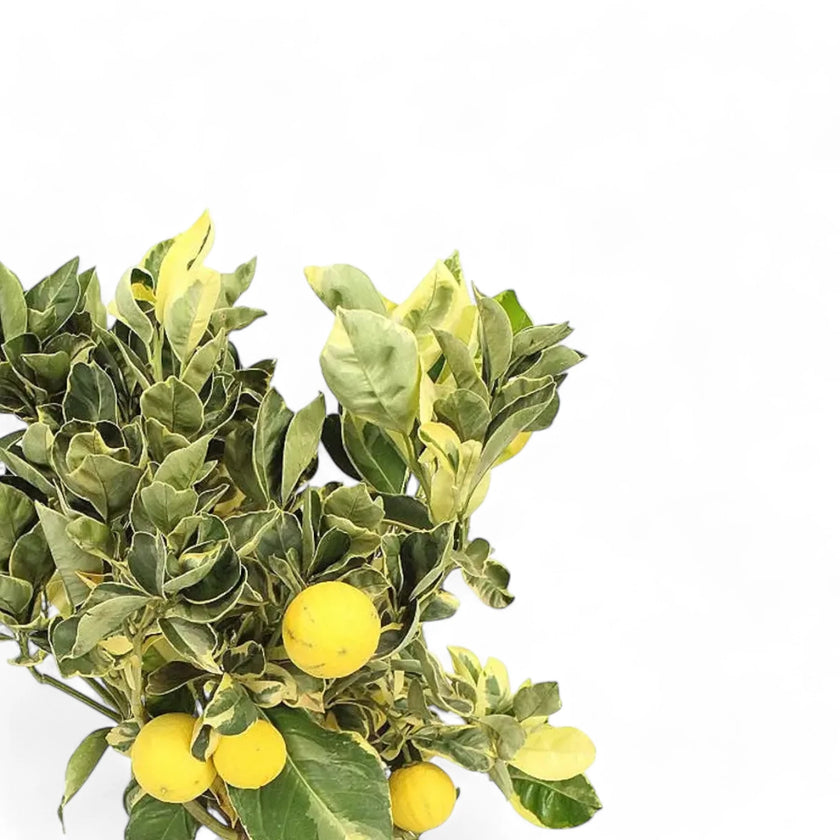
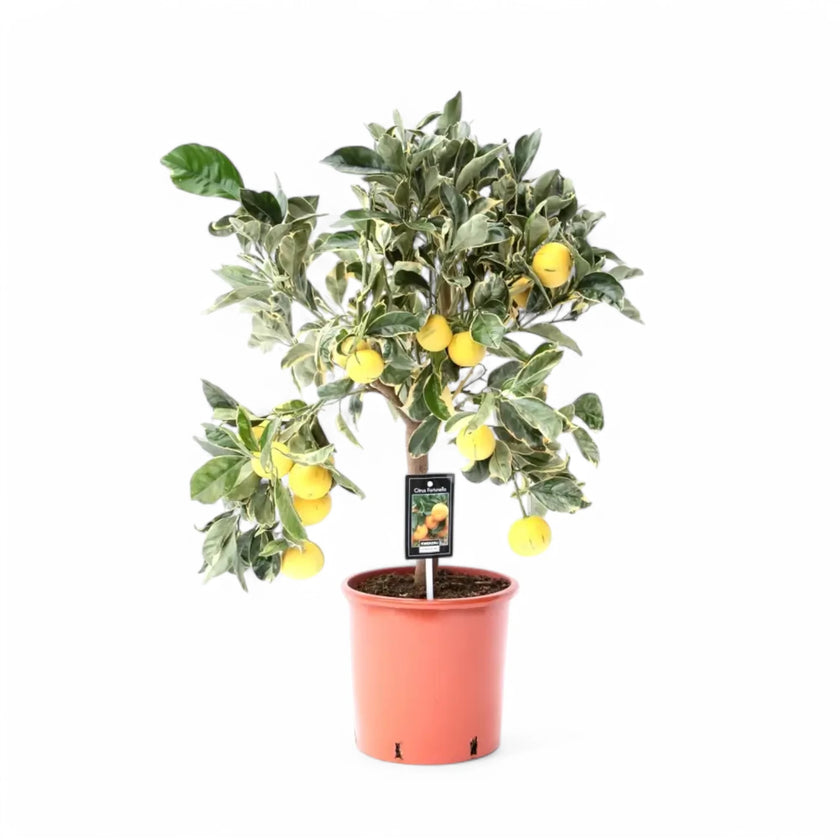
Citrus indoors-turning a bright window into a mini orchard
What you are really buying with indoor Citrus
Citrus in containers is not a generic houseplant. You are bringing in small woody trees, usually grafted onto compact rootstocks, that still need real sun, moving air and a well-drained root zone if they are going to hold shape and fruit well indoors. In return you get glossy evergreen foliage, intensely scented blossom and, if conditions are right-actual lemons, limes or kumquats ripening within arm’s reach.
Our range focuses on Citrus that holds up for European rooms: trees that can be kept around 1-2 m with pruning, cope with winter light when placed well and are happy to move to a balcony or terrace in the warm season. For cultivar-level nuance and long-term troubleshooting, park this overview next to our detailed Citrus indoor care guide.
Sun, seasons and room climate for indoor Citrus trees
Citrus is a full-sun shrub being asked to live as an indoor tree. It only really holds up in very bright spots: in practice that means a south- or west-facing window with several hours of direct sun on clear days, or a strong grow light positioned close and run for roughly 10-12 hours. East windows can work if you add lighting; shaded corners will not.
Seasonal shifts matter. Many people give Citrus a warm, bright summer outside and a bright, slightly cooler but frost-free winter indoors. That “cool bright” phase-think low-teens to around 18 °C in a sunny room-often stabilises foliage and reduces pest pressure, provided substrate is only gently moist. If you want to reality-check what “full sun” means at your windows, our full-sun houseplants guide walks through concrete window and exposure examples.
Keeping roots alive: water, Citrus mix and container choice
Roots decide how well Citrus holds up in a pot. In pots they have much less margin for error than in open ground, so think in terms of root-zone conditions rather than calendar watering:
- Moisture band: substrate should move between “evenly moist” and “partially dry”, never sitting waterlogged for days or drying into a hard, shrinking block.
- Drainage speed: after a proper watering, excess should leave the pot within minutes, not rest for half an hour in a saucer.
- Structure: Citrus mix needs to be coarse and long-lived. Combine a high-quality indoor or aroid base with a big fraction of bark chips, pumice and perlite so the root ball stays airy over several seasons.
When you are undecided, check three things at once: pot weight, feel of the mix deep in the root zone and leaf posture. Limp, folded leaves in dry mix call for a full drink. Limp foliage on a cold, heavy root ball is lack of oxygen, not thirst. For a framework you can reuse across your collection, see our watering guide for houseplants.
Feeding, pot size and long-term structure
Even in good light, Citrus grows in pulses: a flush of soft new shoots, then a pause while wood hardens and flower buds or fruit set. Align fertiliser with that rhythm instead of dosing on autopilot. During active growth and fruit development, a complete fertiliser with micronutrients in modest, regular doses does far more for Citrus than occasional heavy feeds. When no new shoots appear and the tree is simply holding leaves, cut feeding right back.
Pot size should match the root system, not the size you hope the tree will reach. Slightly snug, well-rooted containers with sharp drainage are usually safer than huge tubs of cold, wet substrate. Step up one size at a time and refresh the mix every few years; avoid big jumps that leave roots sitting in unused, permanently damp compost.
Everyday signals Citrus uses to warn you
Citrus does not suffer silently. A few consistent patterns:
- Matt, curled leaves on sunny days that recover overnight: crown is using water faster than the pot can supply; check that the root ball is moist but still airy, not dust-dry.
- Glossy, very dark leaves, soft long shoots and no flowers: light is below what Citrus wants; move closer to real sun or upgrade grow lights.
- Yellowing leaves starting between veins on older foliage: often tired mix or overwatering in heavy substrate, not just “needs more fertiliser”. Root health comes first.
- Fruitlets or buds dropping in clusters: usually a combination of insufficient light, erratic moisture or sharp temperature swings rather than one single “mistake”.
Temperature, humidity and airflow around Citrus
Citrus grows comfortably at typical warm indoor temperatures around 18-26 °C with slightly cooler nights. Brief spells a bit below that are usually tolerable if crowns and roots stay frost-free. Many people keep Citrus in a bright, cooler room in the lower teens during darker months; this can stabilise plants as long as substrate stays only gently moist and the thermometer is not yo-yoing.
Average household humidity is usually enough. Very dry air plus heating increases bud drop, crisping edges and spider-mite pressure. Raising room humidity slightly and avoiding hot air blowing directly over the canopy helps more than constant misting. Continuous, gentle airflow around leaves and pot keeps conditions closer to outdoor life and reduces fungal issues such as sooty mould on pest honeydew.
Safety and placement in homes with pets and kids
Ripe fruit flesh is widely eaten, but leaves, stems, peel and essential oils are not toys for pets. Citrus oils can irritate the digestive system of cats and dogs and may cause stronger symptoms at higher doses. Treat Citrus as a “look and smell” tree, not chewable greenery: position containers where animals cannot strip leaves or drag fallen fruit around, and wash hands after heavier pruning before touching eyes or face.
Unboxing and the first month with a new Citrus tree
Freshly delivered Citrus often responds to a new home with a wobble: some yellow leaves, a bit of droop or a small wave of leaf drop, especially when light level changes sharply. That does not automatically mean root failure-more often it is the tree rebalancing crown and root mass.
After unpacking:
- Put the tree straight into your brightest available spot, away from radiators and obvious drafts.
- Check moisture by digging a little into the rootball; water only if mix is already drying through and always let excess drain.
- Skip repotting and hard pruning in the first weeks unless pot or substrate are clearly wrong.
- Watch for new buds or soft green tips; fresh growth is a better indicator than stressed older leaves.
For a broader view of how plants adjust to new homes and what “normal shock” looks like, our acclimatisation guide walks through typical phases.
Citrus troubleshooting-common indoor issues
- Leaves yellow from the inside out while veins stay greener: in many cases points to overwatering, tired substrate or poor drainage. Check roots, improve aeration and adjust watering intervals.
- Sudden leaf drop after moving indoors: classic response to big changes in light, humidity or temperature. Confirm that roots are healthy, increase light, stabilise climate and wait for new buds rather than reacting with drastic pruning.
- Sticky leaves, black sooty coating: typical sign of sap-sucking pests such as scale or aphids producing honeydew. Rinse foliage, remove heavily infested parts and treat pests promptly so new growth is clean.
- Buds or small fruit fall off before ripening: usually a combination of insufficient light, inconsistent watering or strong temperature swings. Increase light exposure, aim for steady moisture and avoid cold drafts or hot, dry air from heaters.
- Curling, dull leaves with fine webbing: classic spider-mite symptoms, especially in dry air. Improve humidity and airflow, rinse foliage and treat with appropriate measures before the infestation explodes.
Back to top Choose Citrus varieties that match your brightest spot and let compact trees turn that window into a small indoor orchard ↑