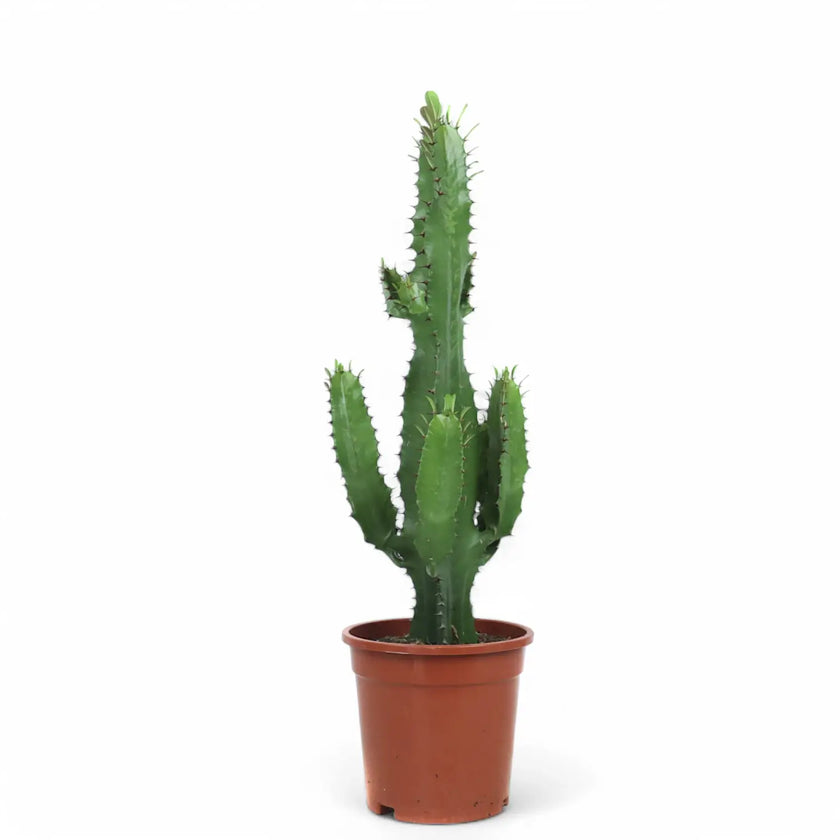
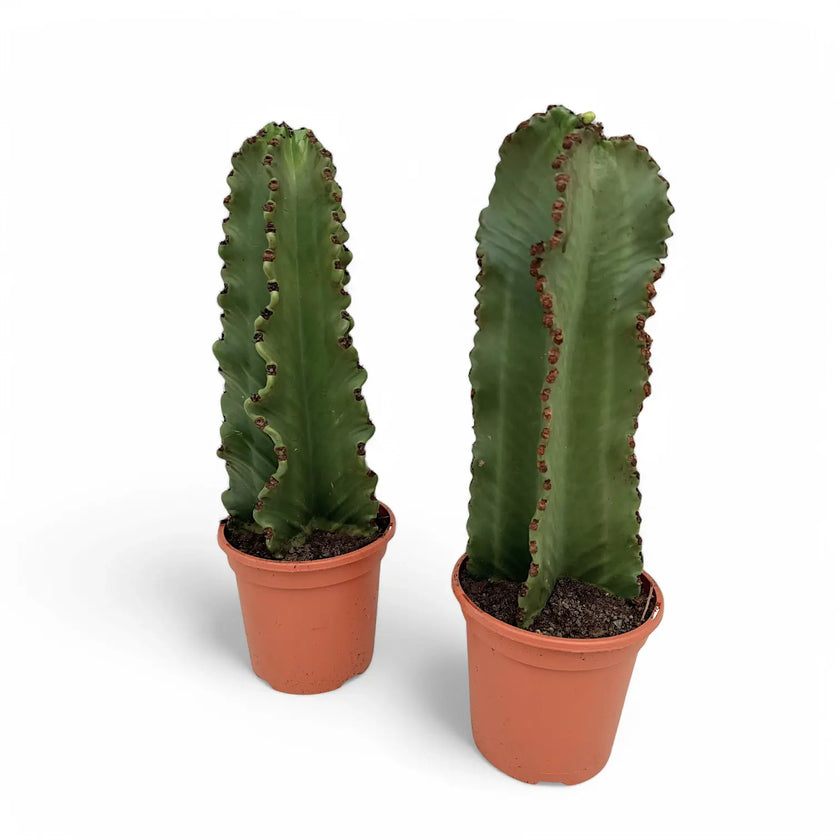
Euphorbia (spurges) - sculptural succulents with a warning sign
What Euphorbia really brings to an indoor collection
Euphorbia is the “is that a cactus?” plant that usually isn’t. Columnar species like Euphorbia trigona, Euphorbia ingens or Euphorbia avasmontana build sharp, geometric ridges; low, branching types carry dense little pads; “crown of thorns” forms put flowers on a thorny lattice. All store water in thick stems and are built for strong light, lean substrate and long dry pauses rather than constant sipping.
Once roots are in the right kind of mix and light is strong enough, Euphorbia is straightforward: it grows steadily, keeps its silhouette and complains early when you misjudge something. Treat it like a bright-climate succulent, not a generic “indoor plant”, and most of the drama disappears. For context on where it sits among other succulents, our arid vs jungle succulents guide shows exactly why it behaves differently from jungle epiphytes.
Wild background-why Euphorbia hates cold, wet pots
Most Euphorbia you see as houseplants come from arid or semi-arid regions of Africa and Madagascar. In habitat they grow on rocky slopes, stony plains or thin soils that shed water quickly. Rain tends to arrive in bursts; roots soak, then sit in warm, airy ground that dries fast. Humidity is low, air is moving and nights often cool down.
In a pot, the translation is simple: lots of light, a root zone built from mineral material with real air gaps, and a watering pattern that alternates between thorough soak and honest dry-down. Cold, peat-heavy soil that stays wet for days is the opposite of what these roots know how to handle.
Light for Euphorbia-as much as your windows can reasonably give
Indoors, Euphorbia wants the brightest spots you own. South- and west-facing windows with several hours of direct sun are ideal once plants are acclimated; strong east windows can work for smaller or younger specimens if they sit close to the glass.
Too little light shows up as soft, elongated growth that leans hard towards the window, with washed-out colour and weak new arms. Too much intensity too suddenly-for example, moving a shade-grown plant straight into full summer sun behind glass-gives flat, bleached or brown plates on the sun-facing ribs. Build exposure up over a couple of weeks and, if you are unsure how hard your windows really are, compare them with the examples in our full-sun houseplants guide.
Substrate and watering-keeping Euphorbia roots alive, not pampered
Below the surface, Euphorbia behaves like a classic desert succulent. Roots want oxygen first, water second. Use a sharply draining mix built from a lean cactus substrate heavily cut with mineral components: pumice, lava rock, coarse sand, fine gravel. Organic fraction should be just enough to hold structure and a bit of nutrient, not a thick sponge of peat.
Water in clear on-off cycles:
- Wait until mix is dry almost all the way through and the pot feels very light.
- Water once, slowly, until liquid runs from the drainage holes.
- Let excess drain completely; never leave Euphorbia standing in a saucer.
Frequent “just a splash” waterings into cool, still-damp mix keep roots in a low-oxygen, permanently stressed state and are the usual starting point for rot at the base. Months of complete neglect in strong light go the other way-deeply wrinkled stems, shrinking segments and stalled growth-but are usually easier to reverse if you catch them before tissue collapses. For the mechanics of how mixes hold and release water, see our houseplant substrates guide paired with the watering deep-dive.
Temperature, humidity and airflow for Euphorbia
Euphorbia loves warm, stable rooms. Temperatures around 18-28 °C are fine; brief cooler spells are survivable if the mix is bone-dry, but cold + wet is where things go bad fast. Avoid cold window bays, unheated floors and draughts from tilted winter windows-especially right after watering.
Dry air is not an issue. These spurges are designed for low humidity and do not need misting; if anything, leaving water droplets on ribs in cool rooms just raises rot risk. What they do need is air that can move. Normal room circulation is enough-just don’t wedge big, heavy pots into closed cachepots with no air access around the stem bases.
Growth pattern and feeding-slow columns, not jungle vines
Columnar Euphorbia grow as segmented, ribbed stems that add height and side arms over time. Some stay single columns; others branch freely, turning into multi-stemmed shrubs. Leaves, if present, are usually small and seasonal, dropping back to leave the architectural framework in place.
Growth is generally measured. In good light you see steady extension and occasional new arms; in mediocre conditions plants may barely change year to year. Feed lightly during active growth with a diluted cactus or balanced fertiliser every few waterings. Priority should always go to light and structure; overfeeding in a compact, low-oxygen mix just produces soft, rot-prone tissue.
Toxic latex sap, spines and safety
Every cut on Euphorbia releases white latex sap. This latex can be highly irritating to skin, eyes and mucous membranes and is toxic if swallowed. Many species also carry spines strong enough to puncture skin easily.
Practical rules:
- Wear gloves and eye protection for heavy pruning, repotting or cutting stems.
- Keep plants out of reach of pets and children; do not grow big, spiny Euphorbia in narrow walkways or play zones.
- If sap gets on skin, wash with plenty of water and mild soap; if it reaches eyes or mouth, rinse immediately and seek medical advice if irritation continues.
What Euphorbia usually looks like after shipping
After transit, Euphorbia often arrives with a few cosmetic marks: small scuffs on ribs, slight wrinkling if it travelled on the dry side, or a little loose grit on the surface. None of that changes how it will perform long term.
Unbox, check that the stem feels firm from top to soil line and place the plant straight into its brightest planned spot. Probe the mix: if it is still faintly moist and cool deeper down, wait before watering; if it is completely dry and the pot feels very light, give one slow, thorough drink and let all excess drain. Hold off on repotting large plants until you see them resume growth-disturbing roots straight out of a box does not make adjustment easier.
Euphorbia troubleshooting-quick read of common patterns
- Base of stems turning brown, soft and wrinkled in a damp pot: classic rot from cold, wet, compact mix. Unpot, cut away all mushy tissue, dust cuts if you use a dry fungicide and restart only firm sections in a much grittier substrate kept on the dry side until new roots form.
- Stems leaning, elongating and losing definition: long-term low light. Move Euphorbia much closer to a south or west window or under strong grow lights; without a light upgrade, no amount of “care” will bring back compact form.
- Deep wrinkles along ribs, pot very light and mix bone dry: chronic drought. Water thoroughly once, let the pot drain and adjust your pattern so it never sits that dry for so long again.
- Flat, pale patches on the sun-facing side: sunburn from a sudden jump into intense light. Shift the plant a little back from the glass or provide a bit of shading at peak hours and increase exposure more gradually next time.
- Cottony clumps or brown bumps along ribs and areoles: mealybugs or scale exploiting tight crevices. Isolate the plant, remove pests mechanically where possible and work through a proper treatment strategy while also improving airflow and avoiding sticky fertiliser residues.
Back to top and compare the Euphorbia that fit your brightest spots, your caution around sap and the silhouette you want indoors ↑